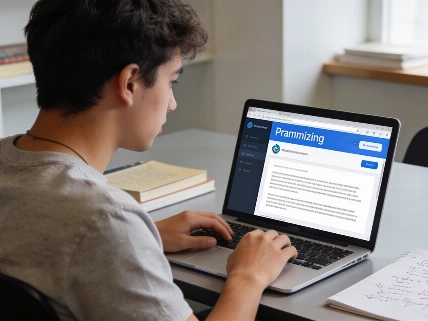
Educators aiming to create interactive learning experiences often run into practical obstacles that keep them tied to static worksheets. Building scenarios or simulations usually calls for technical know-how, visual design skills, and a solid grasp of pedagogy. While most teachers bring deep subject expertise, they rarely have the time or training for digital authoring or instructional design. Even with authoring tools on hand, turning creative ideas into engaging activities remains tough. The Institute of Education Sciences (IES) notes that few teachers have received training in AI literacy or privacy protections, despite growing interest in these areas. IES recommends that pre-service preparation should cover foundational AI knowledge and evolving educational technologies, along with evidence-based instructional practices. Practicing teachers benefit from professional development delivered in real classroom settings.
Why Interactivity Has Been Difficult to Achieve
For a long time, building interactive digital learning meant wrestling with complex authoring software and configuring branching scenarios. Ensuring compatibility with learning management systems added another layer. Creating SCORM-compliant courses or custom learner pathways often required specialized skills and a lot of manual work. This technical burden led many educators to see interactivity as a time sink, making it hard to scale engaging experiences. UNESCO points to ongoing inequality in access to computer-science education, especially in lower-income areas where teacher shortages and infrastructure gaps persist. Limited professional development and scarce learning resources add to the challenge. While AI tools can lower production barriers, they do not erase disparities in access or professional capacity.
The Three-Skill Challenge in Learning Design
Interactive learning depends on the intersection of pedagogy and technology. Teachers know their subjects and classroom routines, but few have formal training in digital instructional design or the bandwidth to master advanced authoring tools. Heavy workloads leave little room to build these extra skills. Even with platforms available, the gap between educational vision and practical delivery sticks around. IES warns that without strong guidance, teacher use of AI could weaken pedagogy. This highlights the need for professional development and human oversight when adopting new technologies.
AI Tools Shift the Focus to Pedagogy
AI-powered course creation platforms are starting to change the landscape. Rather than just speeding up content production, AI-native tools automate many technical steps in building interactive activities. This lets educators focus on designing meaningful learning experiences, such as scenarios and simulations that help learners apply knowledge and make decisions. Tools like Articulate Storyline, iSpring Suite, Genially, and Mexty each take a different approach to digital learning design. Some emphasize detailed interaction design, others build from presentation materials, and AI-assisted platforms aim to cut down manual effort. The main question is not which tool is most popular, but whether it helps teachers design activities that prompt learners to think and make choices. IES-backed projects like TrueMark have piloted teacher-controlled AI writing platforms with eight teachers and about 350 students in grades 6–8 across four schools. In this pilot, all teachers found the platform intuitive, most saw positive instructional changes, and students' estimated skills improved across tracked writing skills, with greater growth among those who completed more assignments. Teachers could set AI-use rules, monitor students' writing processes, and use a copilot that asked guiding questions instead of just giving answers.
What Makes AI-Native Platforms Different
Many traditional authoring tools now add AI features for generating text or quizzes. Still, these often leave educators to build interactions and set up course logic themselves. AI-native platforms weave artificial intelligence throughout the course creation process. Teachers set learning objectives and describe the experience they want, while the platform helps generate interactive scenarios and feedback within a connected workflow. Automation levels differ, so it pays to check which features each platform actually supports. For instance, Articulate Storyline may suit highly customized branching, iSpring Suite works for PowerPoint-based courses, Genially focuses on visual content, and Mexty offers AI-assisted course creation from existing materials. Educators should pick tools that fit their objectives, accessibility needs, and available review time. IES stresses that accessibility, bias, transparency, and human oversight are system-level requirements for educational AI. These governance factors matter when course creators process student work, generate learner profiles, or adapt activities based on performance.
Human Expertise Remains Essential
AI does not replace educators. As technical production becomes more automated, teachers can spend more time designing learning experiences and making sure content is relevant and accessible. AI can handle repetitive tasks, draft content, and speed up development, but human oversight is needed to review materials, check accuracy, and ensure alignment with learning goals. Relying too much on automated content risks producing generic experiences that miss important context or learner needs. Before using AI-generated activities, educators should confirm they support intended objectives, offer meaningful choices, and provide useful feedback. The Institute of Education Sciences states, "AI will be most relevant and beneficial when research and development is grounded in the needs of schools and includes special education teachers, students with disabilities, and their families as co-designers." UNESCO also calls for interactive learning that builds critical thinking and ethical reflection, along with the ability to prompt AI systems and understand their logic, rather than treating AI as a substitute for instructional expertise.
Choosing the Right Approach for Interactive Learning
The move toward AI-native course creation is changing how teachers approach interactive learning. Instead of building every element by hand, educators can now focus on intent and instructional quality. The most effective learning environments will blend the speed and scalability of AI with the judgment and expertise of experienced teachers. As AI tools evolve, the ability to design engaging and practical learning experiences will remain a core responsibility for educators. IES-supported research is also exploring AI-powered simulations for teaching skills like communication and collaboration, and developing classroom support tools that assist teachers, educational assistants, and paraprofessionals in inclusive classrooms. UNESCO's work in higher education highlights the need for teachers to develop AI competencies alongside media and information literacy, with professional development initiatives such as translating and localizing generative-AI courses for national teacher training in Kazakhstan. For more on these initiatives, see the Institute of Education Sciences and UNESCO World Coding Day.