Generative AI systems have changed how students complete assignments, making the classic take-home essay less effective at showing real understanding. Teachers who once trusted essays to reveal critical thinking started noticing something off: student writing appeared polished, but the authentic voice and reasoning typical of middle schoolers were missing. Suddenly, flawless paragraphs and advanced vocabulary pointed to AI doing more than just helping. It was finishing the work. This shift highlights a broader change in the information landscape. UNESCO points out that generative AI can produce convincing text, images, audio, and video, which brings new questions about reliability, authenticity, privacy, algorithmic bias, and transparency (UNESCO curriculum announcement).
Recognizing the Limits of Traditional Assignments
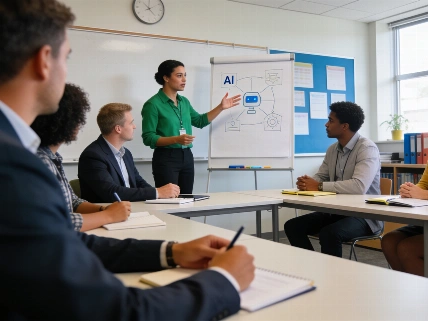
Teachers and tech teams first tried blocking AI tools and spotting automated writing. These technical fixes, though, did not solve the core problem. If an assignment could be finished by an algorithm in seconds, the issue was with the assignment itself. Prompts that only asked for fact recall or basic synthesis made it easy for students to use AI as a shortcut, skipping the learning process. UNESCO describes this as a call for media and information literacy. Learners need to understand how AI works, spot its limits, and question generated material instead of accepting it without scrutiny.
Turning AI from a Cheating Tool into a Learning Partner
Rather than seeing AI as just a threat, educators started looking at which prompts were easiest for automation. By reviewing assignments, they found tasks that pushed students to repeat information instead of thinking deeply. This led to a new approach: instead of banning AI, teachers created activities that made students engage critically with AI-generated content. This matches the hands-on activities in UNESCO’s media and information literacy curriculum, which urges students to evaluate AI-generated content, spot biases, and understand the algorithms and interests behind information (UNESCO curriculum details).
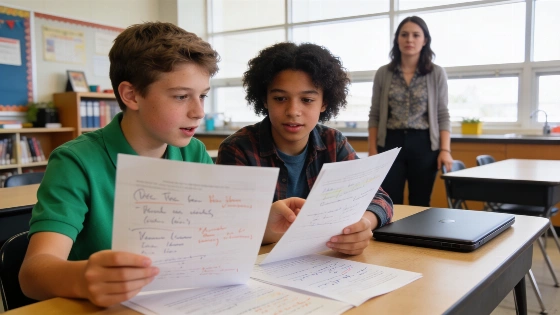
One method asked AI to write intentionally biased summaries of a reading. Students then judged these outputs, debated their accuracy, and explained their reasoning to classmates. This made students' thinking visible and required them to show real understanding, not just turn in an essay. In another case, students worked on problem-based learning challenges and pitched their solutions to peers, defending their choices and answering questions live. Assessment focused on how well they reasoned, whether their ideas were practical, and how clearly they communicated under pressure. UNESCO’s framework backs these assignments, stressing conceptual understanding and flexible classroom activities instead of relying on a single software tool or detection system.
Building Authentic Engagement and Ownership
These new assignments turned classrooms from places for static submissions into active learning spaces. Students who once hid behind AI-generated text became confident presenters, standing by their ideas and showing ownership of their work. Moving from policing plagiarism to offering deeper challenges led to more engagement and richer learning. UNESCO’s guidance treats AI literacy as more than technical skill, tying it to critical thinking, informed trust, human rights, and decision-making. A student’s ability to verify, challenge, put in context, and use generated content ethically can become a visible learning outcome.
Sharing these strategies helped teachers across grade levels work together and sparked bigger conversations about assessment design. As generative AI keeps evolving, educators see that updating assignments is a continuous task. The aim is to help students build critical thinking skills and use AI responsibly, not just let it finish their work. UNESCO’s curriculum, created with international experts and reviewed by more specialists, is meant for educators, teacher-training programs, and curriculum developers who want to build these skills.
Moving Beyond Compliance to Real Learning
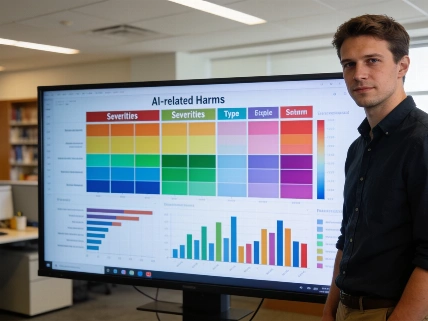
Generative AI has shown where traditional assessments fall short by rewarding compliance and formulaic answers. Real education means building curiosity, empathy, and innovation—qualities algorithms cannot copy. By designing assignments that require human perspective and real-world interaction, teachers help students gain skills that matter in an AI-driven world. UNESCO’s model urges educators to address AI through structured learning activities, looking at issues like algorithmic bias, inequalities, sustainability, transparency, and human rights, instead of just using bans or automated detection.
This approach keeps technology in the classroom but uses AI as a cognitive partner. Students are challenged to analyze, critique, and build on automated outputs. As classrooms change, the focus moves from simply finishing assignments to encouraging real inquiry and preparing students to lead in a changing educational environment. The UNESCO curriculum blends conceptual explanations with discussion questions, hands-on activities, and examples that teachers can adapt to different settings, supporting media and information literacy in AI-shaped classrooms.
This article draws on educator experiences published in EdSurge, with support from Learning Commons. EdSurge retains editorial control over all content. The work is licensed under a CC BY-NC-ND 4.0 license.