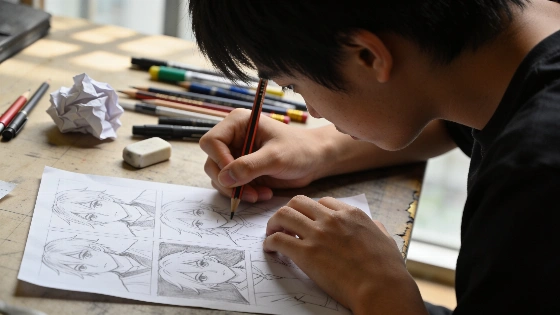
Looking at how popular media shapes digital literacy and creative education, the manga series Naruto emerges as a revealing example. Masashi Kishimoto launched Naruto in Weekly Shōnen Jump in 1999, wrapping up the saga in late 2014. The story grew out of Kishimoto's earlier 1997 one-shot about fox spirits, which he later reworked into a ninja narrative rooted in Japanese tradition. Publisher records note, “After considering various genres for his next project, Kishimoto decided on a story steeped in traditional Japanese culture.” The franchise has since branched out into anime, films, novels, video games, and other media, showing how far its influence stretches and how easily it adapts (Book Hero).
Character-Driven Storytelling and Its Educational Value
Uzumaki Naruto, the series' central figure, starts as an outsider and grows into a respected leader. His journey highlights perseverance and self-discovery. Kishimoto’s creative path began with a childhood fascination with Dragon Ball, then formal art training, and recognition through the Hop Step Award for new manga artists. The first version of Naruto in 1997 was a one-shot about fox spirits before it became the serialized ninja epic. This emphasis on character arcs and personal growth gives educators and learners a blueprint for narrative design, showing how relatable leads and evolving relationships can keep audiences engaged over time.
World-Building and Creative Process
The world of Naruto unfolds across the Five Great Shinobi Nations, each with its own customs and mystical skills. Kishimoto’s world-building—adding elements like tailed beasts and summoning techniques—shows how creators can mix inspiration from earlier works with new ideas. This process underscores the need for planning, iteration, and adapting concepts as stories develop. Viz Media, a Shogakukan subsidiary, published the English-language manga, distributing physical volumes in the United States. For instance, Naruto, Vol. 29 appeared in paperback from Viz Media on 1 December 2008 (ISBN 9781421518657).
Diversity of Characters and Emotional Depth
The series introduces a broad cast, each with unique motivations and backgrounds. Kishimoto often expanded character roles beyond his initial plans. This focus on detail demonstrates how emotional authenticity and nuanced characterization can deepen reader investment, a lesson that carries over to both traditional and digital learning settings.
Cross-Cultural Appeal and Digital Literacy
Naruto's worldwide success, especially in Western markets, highlights the universal draw of themes like friendship and rivalry. The main character’s unconventional look and behavior challenge norms, making the story accessible to many. Studio Pierrot produced the anime adaptation in 2002, followed by Naruto: Shippuden after a two-and-a-half-year time skip. The franchise expanded with side stories and works about Naruto’s son, Boruto. Entertainment journalism points to the anime’s lasting audience appeal, crediting its storytelling, unique power system, and complex characters (ComicBook.com).
Educational Takeaways for Digital Creators
Though Naruto is not an educational technology tool, its creation and reception offer practical lessons for digital learners and educators:
- Planning and Iteration: Kishimoto’s work under tight deadlines and shifting storylines shows the importance of adaptability and ongoing development in creative projects.
- Character and World Design: Building layered characters and immersive worlds can boost engagement and support deeper learning in digital storytelling or game design courses.
- Emotional Resonance: Focusing on genuine character emotions and relationships can make stories more memorable and meaningful for learners.
- Global Perspective: Seeing how stories connect across cultures can guide the creation of inclusive educational content and digital experiences.
Applying Manga Storytelling Principles in Education
Educators and students exploring digital storytelling, creative writing, or media studies can use Naruto as a model for narrative structure, character development, and world-building. These skills matter more in online learning, where interactive stories, gamified lessons, and multimedia projects rely on strong narrative foundations.
After ending the series in late 2014, Masashi Kishimoto kept contributing to the franchise with works like Naruto: The Seventh Hokage and the Scarlet Spring and by writing the story for the latest Naruto movie. His insights into the creative process reveal the challenges and rewards of long-term storytelling. By analyzing works such as Naruto, digital learners can pick up practical strategies for building engaging narratives and developing their own creative voices.