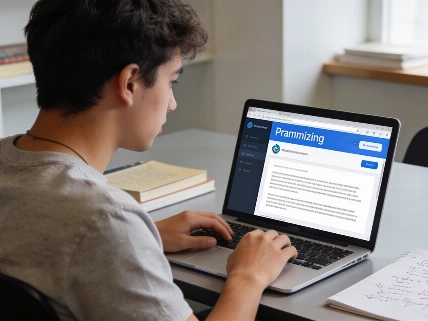
This spring, a small education software company nearly missed a demo opportunity. A prospective customer searched for the product's price and found a figure over $100,000 per year—an amount surfaced by an AI summary referencing a public procurement document from the company's largest client. The company's website offered no pricing, so the AI pulled the only public number available, which did not reflect what most customers pay.
Why Missing Information Matters
Organizations looking for a learning management system (LMS) or authoring tool often start with search engines or AI assistants. The answers depend on what vendors choose to share. A review of nearly 2,000 education company websites showed fewer than one in four display any pricing, about one-third publish a case study, and only about one in ten explain implementation. Technical documentation appears on about one in fourteen sites, and product-comparison pages on about one in twenty. Most vendor sites highlight broad educational articles and opinion pieces, skipping decision-useful details like price, deployment needs, integrations, or comparative features. These findings appeared in SmartBrief's educator litmus test.
District purchasing experience shows missing information can cause more than inconvenience. One district cut its software applications from 1,800 to 250 after centralizing purchasing and enforcing data-privacy agreements, saving an estimated $23 million. This drop came from tighter governance and portfolio control. Decentralized purchasing or vendor-driven outreach often leads to overlapping and unnecessary tools. In districts where local property taxpayers fund most of the budget—such as one with 94 percent from local sources—predictable pricing and clear contract terms matter even more.
The Risks of Relying on AI Summaries
When vendors leave out pricing or integration details, AI assistants fill the gap with whatever public data they find. This can produce misleading answers, like quoting a price negotiated by a much larger customer or giving uncertain compatibility information. For instance, asking if a platform integrates with a specific HR system may yield a confident answer, even if the vendor never published documentation. The AI infers from scattered sources, raising the risk of error. As one district IT leader said, "The quickest way for me to be out of a conversation is when I ask a direct question: how much does your product cost?" Vendors who avoid pricing questions can stall discussions.
How Incomplete Information Affects Decision-Making
With heavy vendor outreach and little clear public information, many school and district leaders stick to familiar names or companies with strong conference visibility. This habit can leave out newer or smaller vendors with better products, since learning the basics requires a meeting that busy decision-makers may not schedule. The best solution for learners might never reach the shortlist.
Procurement criteria, evidence standards, accountability metrics, interoperability requirements, and transparency expectations all shape what technology developers build and offer, according to a Stanford University research agenda on AI and learning. The same agenda points out that most school systems lack clear guidance for AI integration, causing inconsistent expectations across districts and making procurement more complicated.
What to Ask Vendors Before Booking a Demo
To avoid surprises and make informed choices, use the vendor's public website as a first filter. For missing details, request the following by email before agreeing to a meeting:
- A price range for your organization size, including what is covered. Watch for implementation, support, and content licensing, as these often drive quotes apart. Most vendors quote by deal, enrollment, or headcount, not a universal list price. For example, Populi lists $199 per month plus $9 per billable student per month, with implementation, data migration, training, and support included. Data migration can run $15,000–$30,000 for one clean source or $60,000–$150,000 for complex historical records. Integrations may cost $8,000–$35,000 per spoke or $40,000–$120,000 for a full two-way SIS-to-ERP connection.
- Results from a customer similar to your organization, ideally in the same industry and with a comparable number of learners. Ask for a contact name if possible.
- Specifics about integration with your existing systems. Name your HR platform, single sign-on solution, and content standards (such as SCORM or xAPI) to prompt a concrete answer.
- A summary of what the first 90 days will require from your team, including roles and estimated hours.
- Details about where learner data is stored, who can access it, and how you would retrieve it if you decide to leave the platform.
Vendors with strong products usually answer these questions directly. If the only reply is a link to schedule a call, that may signal what working with the company will be like.
Verifying Information from AI Assistants
AI tools can help build an initial vendor list, but before using any quoted figures in a business case, check the source. Ask the assistant where the information came from, how recent it is, and whose contract or review it references. Then, send the same question to the vendor and compare answers. This extra step can prevent misunderstandings like the one that nearly cost the software company a potential customer. Pricing units can differ widely between vendors, including seats, credits, word allowances, and institutions, making direct comparison tough without normalizing expected volume. Institutional deals, such as those cited for the University of Southampton (£87,621) and University of East Anglia (£50,892), do not set a budget for other schools or universities.
Improving Transparency in EdTech
Many education technology companies could fix these issues with little effort. In the earlier example, the vendor added a starting price to its website—a figure much lower than the AI-surfaced number. This update made their offer clearer to future customers and reduced confusion. District leaders are pushing for transparent pricing, with some requiring annual price increases to stay at or below the Consumer Price Index to avoid unexpected cost jumps after implementation. Financial transparency is becoming a must, especially for districts funded mainly by local taxpayers.
Procurement is now seen as a market-shaping tool, not just an administrative step. Guidance from groups like the Fordham Institute recommends tying at least 40 percent of contract value to agreed student-learning outcomes, using valid assessments and regular provider-district data reviews. States are moving toward more accountability, with 53 percent having published guidance for buying AI-enabled tools, according to the State Educational Technology Directors Association. The Education Endowment Foundation is commissioning new guidance to support evaluations of AI and education technology in schools and colleges, aiming to provide a common framework for testing efficacy claims and measurable outcomes before funds are committed.