Stepping into a management role means shifting focus from personal achievement to helping others reach their goals. For those working in learning and development (L&D), pinpointing which management skills actually move the needle for team performance matters. Instead of tracking completed training modules, L&D leaders should look at real workplace actions and give managers chances to practice the skills that count.
Defining Management Skills in Practice
Management skills let someone plan work, organize resources, lead people, solve problems, and hit organizational targets. These abilities reach beyond daily job tasks. For instance, running a performance review takes more than ticking boxes—it relies on listening, setting clear expectations, and agreeing on next steps. Zeroing in on these core skills, rather than broad labels, leads to more meaningful professional growth.
In the public sector, management effectiveness gets measured through tools like the U.S. federal Annual Employee Survey, required by 5 U.S.C. § 7101. The Office of Personnel Management runs this survey to check leadership policies, workplace conditions, recognition, professional development, and how employees can contribute to agency missions. This framework shows that management effectiveness covers communication, employee development, recognition, and alignment with institutional goals, not just finishing tasks (U.S. Department of Commerce).
Types of Management Skills
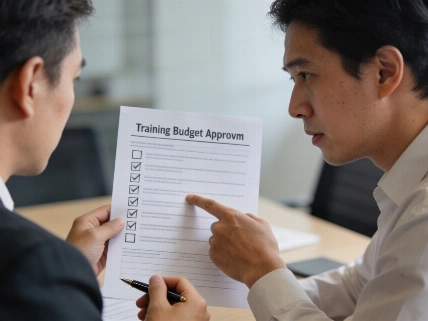
Robert Katz's framework splits management skills into two main types: technical and human. Technical skills cover job-specific knowledge and processes, like preparing a training budget. Human skills involve working well with others, such as coaching or supporting colleagues. Conceptual skills help managers see organizational priorities and link team activities to bigger business needs. Good managers blend these skill sets, instead of treating technical know-how and people management as separate jobs.
Job specs from public-sector organizations, including the State of Georgia and the City and County of San Francisco, show that management roles often combine strategic planning and resource allocation with staff development and communication. Conflict resolution and performance monitoring also come into play. For example, the Georgia HR Generalist Supervisor role lists communication, listening, negotiation, conflict management, problem solving, relationship building, and performance-outcome monitoring as core abilities. San Francisco’s Contracts Audit and Compliance Manager handles mentoring, performance reviews, feedback, professional development, and addressing performance gaps, showing how conceptual, technical, and human responsibilities work together in real jobs.
Key Management Skills to Develop
Building management skills takes ongoing effort. The following ten skills give a practical path for growth, with examples of how each shows up at work:
- Communication and Active Listening: Managers who listen and clarify expectations help teams understand goals and avoid confusion. The Georgia HR Generalist Supervisor job calls for "excellent oral, written, listening and interpersonal communication skills."
- Delegation and Empowerment: Good delegation means making outcomes, decision-making authority, resources, and checkpoints clear, not just handing out tasks.
- Planning, Prioritization, and Resource Allocation: Spotting tradeoffs early helps prevent overload and leads to better decisions. The University of Virginia’s Director of Parking and Transportation role covers both short- and long-term strategic initiatives and resource allocation.
- Coaching and Constructive Feedback: Coaching talks prompt employees to reflect on their work and sharpen their judgment. San Francisco’s Contracts Audit and Compliance Manager is expected to "lead, mentor, and develop staff through performance management, performance reviews, feedback, and professional development."
- Performance Management and Accountability: Tying performance standards to support and steady follow-up keeps accountability on track.
- Emotional Intelligence and Inclusive People Management: Noticing personal reactions and making sure everyone can contribute fairly are key for team cohesion.
- Conflict Resolution and Negotiation: Tackling disagreements head-on, instead of dodging them, leads to better results. A peer-reviewed study indexed by the National Library of Medicine found a positive association between authentic leadership and overall conflict management (R² = 0.220, β = 0.469, p < 0.001), with collaboration scoring highest among conflict-management styles (3.98). The study also found authentic leadership was positively tied to collaborating, accommodating, avoiding, and compromising styles, but not significantly with competing (PubMed Central).
- Decision-Making and Problem-Solving: Looking at evidence and options before committing resources leads to stronger decisions. The University of Virginia’s Director role lists analytical reasoning and data-informed decision-making as must-have skills.
- Strategic Thinking and Business Acumen: Linking team activities to organizational priorities helps use resources wisely. Public-sector job descriptions often require aligning team goals with broader organizational objectives.
- Digital Fluency and Change Management: Assessing technology and guiding teams through change matter more in today’s workplaces.
Management Skills Versus Leadership Skills
Management and leadership skills often overlap, but they serve different roles. Management focuses on organizing work, resources, and accountability. Leadership builds shared direction and commitment. Managers should use leadership skills to strengthen, not replace, solid operational practices. The right mix depends on the situation and what the team needs.
Leadership development programs, like Arkansas.gov’s "From Bud to Boss—Transitioning from Peer to Manager," treat the move to management as a unique challenge. The program points out that those who handle this shift well set themselves up for ongoing leadership growth and create positive results for their teams and organizations.
Choosing Which Skills to Develop First
New managers often start with delegation, feedback, and workload planning, since these areas commonly cause performance issues. More seasoned managers might need to work on conflict resolution or teaming up with other groups. Senior L&D leaders could focus on strategic decision-making and resource management. Spotting common workplace scenarios helps decide which skills to tackle next.
Survey data from North Carolina’s 2026 Employer Needs Survey shows that just under half of employers took part in any work-based learning activity. This highlights the value of workplace practice, coaching, and applied learning for building management skills beyond classroom lessons.
How L&D Teams Can Support Management Skill Development
Building management skills takes more than online courses. Effective development includes needs analysis, feedback, practice, and spaced learning sessions. A step-by-step approach might start with diagnosing a specific behavior, rehearsing realistic situations, applying learning at work, and checking progress over time. This process helps make sure skill development leads to real changes in how people work.
Public-sector frameworks, like the Annual Employee Survey run by the Office of Personnel Management, offer established ways to connect management behavior with employee satisfaction and agency performance. These assessments back up the value of steady feedback and professional development for effective management.
Demonstrating Management Skills on a Resume
When listing management skills on a resume, focus on concrete proof instead of adjectives. Use active language to show real results, such as team size, budget handled, or measurable improvements. Tailor your summary to your actual experience and back it up with specific examples that fit the job you want. Job postings from places like the University of Virginia and the State of Georgia often require "excellent leadership, communication, negotiation, and conflict resolution abilities," giving clear targets for candidates to address.
Integrating Management Skills with Broader L&D Strategies
Management skills matter most when they improve work outcomes. For L&D teams, the aim is to make decisions clearer, offer stronger support, and help teams work together more effectively. This approach fits with the need for responsible data strategies in L&D, as covered in the earlier breakdown of data governance for analytics tools.