Building a beverage portfolio that works across different markets takes more than just a famous name. The Coca-Cola Company has found major opportunities in both developed and emerging regions, focusing on local consumer needs and using digital transformation to push growth. In 2025, Coca-Cola’s global system volume hit 33.8 billion unit cases, with products reaching over 200 countries and territories. Sparkling soft drinks made up 69% of this volume, and 84% of total volume came from outside the United States. This points to the company’s strong international reach. Mexico, China, Brazil, and India together made up 33% of worldwide unit-case volume, putting these markets at the center of Coca-Cola’s global growth plans, as reported by Spherical Insights.
Understanding Coca-Cola's Market Approach
Developed markets account for about 20% of the global population, where Coca-Cola still looks to gain more market share. Developing and emerging markets cover roughly 80% of the population, but nearly 70% of people in these areas do not buy commercial beverages. This gap shows the company’s chance to introduce and grow its beverage lines from scratch in new regions. Coca-Cola’s reported volume growth is focused in large emerging markets, especially India, China, Mexico, and Brazil. In the third quarter of 2026, Coca-Cola’s global volume rose 5%, with these four markets leading the way, according to SEC API Insights.
Key Growth Pillars and Digital Transformation
Coca-Cola's strategy relies on building a portfolio of popular brands and transforming marketing and innovation. The company also works on optimizing its ecosystem, developing talent, and strengthening its competitive position. Getting closer to consumers and using digital tools at every stage—from marketing to execution—remains a priority. Market commentary notes that Coca-Cola uses pricing actions and smaller or locally tailored package sizes, along with digital engagement and product innovation, to respond to different consumer-spending conditions. Connected packaging and targeted campaigns tied to major events help boost consumer interaction and transactions. These tactics let the same brands appear through different price points, formats, and local experiences.
Marketing and Consumer Engagement
Effective marketing at Coca-Cola starts with understanding what consumers want and creating products that fit local tastes. The company uses a networked marketing model that blends product and digital experiences with live and retail events. Recent campaigns, such as Fanta’s Halloween partnership with Universal Pictures and Blumhouse, have mixed immersive retail activations with digital experiences in about 50 markets. Coca-Cola’s digital-first approach has shifted its media spend, with digital channels expected to take a bigger share of total media investment.
Innovation Beyond New Flavors
Innovation at Coca-Cola goes further than just new flavors. The company focuses on bigger product launches, packaging, and equipment. In 2025, launches like Coca-Cola with U.S. cane sugar, Sprite + Tea, Bacardi Mixed with Coca-Cola, Cappy Bubble, and BODYARMOR Flash I.V. helped drive revenue growth in selected markets. Each innovation has a clear goal, aiming to boost shelf presence and attract new consumers. Coca-Cola HBC, a major bottling partner, reported third-quarter net-sales revenue of €3.50 billion, up from €3.20 billion the year before, with organic revenue up 9.0%. Organic volume rose 5.4%, including 4.5% growth in sparkling drinks and 25% growth in energy drinks, as stated by CEO Zoran Bogdanovic in a Morningstar trading update.
Revenue Growth Management and Execution
Revenue Growth Management (RGM) is a key skill for Coca-Cola, helping the company decide where to compete and how to adjust its brand, price, and package setup to fit customer needs. In 2025, Coca-Cola led the beverage industry in customer value creation for the eighth straight year. Integrated execution means bottlers and partners can succeed, with a focus on aligning marketing and commercial plans and investing in digital tools to speed up consumer recruitment and boost consumption. Coca-Cola’s international-growth model works through a global bottling system, with local bottlers such as Coca-Cola FEMSA playing a major role in turning global brands into regional sales, pricing, packaging, and route-to-market choices. In the third quarter of 2026, Coca-Cola FEMSA reported volume growth of 5.3% to 1.09 billion unit cases, revenue growth of 10.9% to 79.72 billion Mexican pesos, and operating-income growth of 15.4%.
Product Availability and Outlet Expansion
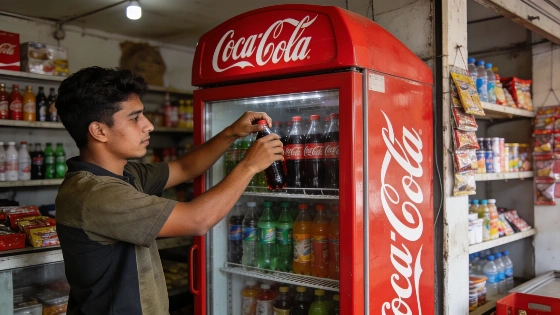
Making sure products are in the right places stays a top priority. Coca-Cola brands are found in about 33 million outlets worldwide, but the company sees more room to expand coverage, cut out-of-stock issues, and improve product placement. Increasing the use of cold-drink equipment—now around 14 million units in customer outlets—also helps drive higher consumption. Coca-Cola HBC’s developing and emerging territories showed strong reported growth, with developing-market revenue up 9.7% to €781.7 million and volume rising 3.7% to 138.7 million unit cases. Emerging-market revenue rose 10.5%, while volume climbed 5.8% to 538.8 million unit cases, according to RTT News.
Implications for Educational Technology and Digital Skills
For educators and students interested in digital marketing or business strategy, Coca-Cola's approach offers practical examples. The company's move to digital-first marketing, focus on local consumer insights, and use of integrated execution models show how large organizations adapt to changing markets. These strategies point to the value of digital skills, data-driven decision-making, and cross-functional teamwork in modern business. Coca-Cola HBC raised its 2026 organic-revenue-growth outlook to slightly above its previous 6%–7% range, while keeping an organic EBIT-growth outlook of 8%–10%, supported by a 9.6% increase in reported revenue and 5.4% organic-volume growth, with strong energy-drink performance and 9.8% organic-revenue growth in emerging markets.