Bitcoin draws attention from institutional investors and individuals exploring financial technology. Some companies now hold large bitcoin reserves, yet skepticism persists among well-known investors and educators. Anyone considering bitcoin for a curriculum or investment portfolio needs to grasp the main criticisms and counterpoints shaping the debate.
Volatility and Its Educational Implications
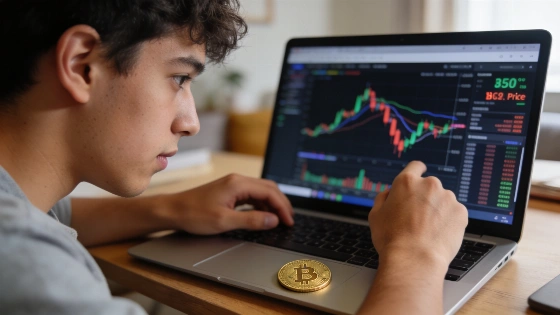
Bitcoin’s price swings sharply, with daily moves of several percent and a nearly 80% drop from its peak during the bear market between November 2021 and November 2022. Prices have rebounded, but this instability prompts questions about bitcoin’s reliability as a currency or store of value. For educators, such volatility makes risk management and the distinct traits of digital assets central topics compared to traditional investments.
Bitcoin supporters say volatility is common for new technologies. They argue that as more people use bitcoin, price swings could ease, leading to greater stability. This view helps learners see how market maturity and adoption shape asset behavior.
Payment Efficiency and Practical Use
Critics highlight bitcoin’s slow transaction speed and efficiency as hurdles for payments. Processing a transaction can take about 10 minutes, much slower than credit cards. Spending bitcoin may also trigger capital gains tax, which complicates everyday use.
Advocates respond that credit card payments seem instant, but final settlement can take days. Bitcoin transactions settle in roughly 10 minutes, and tools like the Lightning Network now allow near-instant payments. These advances show how technology can address earlier limits, offering students a look at how digital payment systems evolve.
Environmental Impact and Sustainability
Bitcoin’s energy use remains a major issue in financial and educational circles. The University of Cambridge’s Bitcoin Electricity Consumption Index finds the network consumes more energy than some countries. This raises concerns about the environmental cost of running the bitcoin network.
Proponents point out that a large share of bitcoin mining now uses renewable energy. The Cambridge Centre for Alternative Finance reported that about 52% of bitcoin mining relied on sustainable energy in 2025. As renewables become cheaper, miners may shift further toward eco-friendly practices. This debate gives educators a way to discuss how technology, sustainability, and economic incentives intersect.
Criminal Use and Transparency
Some critics claim bitcoin and other cryptocurrencies enable illegal transactions, such as money laundering and dark web activity. While these risks exist, advocates cite research showing most crypto transactions are legal. For instance, a report by former CIA Acting Director Michael Morell found criminal use of bitcoin is likely lower than in traditional banking. Blockchain’s public records also make tracking and digital forensics easier, which can help uncover illicit activity over time.
Assessing Bitcoin's Value
Another common criticism is that bitcoin lacks intrinsic value, since it isn’t backed by physical assets or government guarantees. Skeptics question whether scarcity alone supports its price and often see it as speculative rather than a true currency.
Supporters counter that bitcoin’s value comes from its decentralized design, limited supply, and use as a hedge against inflation. Some countries have started holding bitcoin as a reserve asset. For learners, this debate opens discussion on how value forms in digital economies and the role of trust in decentralized systems.
Competition from Other Cryptocurrencies
Debate continues within the crypto community about whether other coins could overtake bitcoin in market importance. Unlike many rivals, bitcoin lacks a central development team, which some view as a weakness and others as a strength. Its focus on peer-to-peer payments and its first-mover status are seen by advocates as key advantages.
Key Considerations for Educators and Investors
Before adding bitcoin to a learning module or investment portfolio, it’s crucial to understand the unique risks of cryptocurrencies. Bitcoin’s volatility and potential for market manipulation exceed those of traditional securities. Regulatory protections for crypto holders are limited, and the legal landscape remains unsettled. Bitcoin is not insured by the Federal Deposit Insurance Corporation or the Securities Investor Protection Corporation, so investments should be limited to amounts one can afford to lose.
Fidelity Digital Assets® and related disclosures stress that crypto investing carries risk, including total loss. Crypto assets can become illiquid, lack government insurance, and may be affected by supply and demand, inflation expectations, interest rates, and regulatory shifts. There’s no guarantee bitcoin will keep its value or that merchant acceptance will grow. Technical risks, such as undiscovered protocol flaws or advances in quantum computing, could also threaten the bitcoin network’s security.
In October 2026, the Bank for International Settlements’ Committee on Payments and Market Infrastructures, led by Fabio Panetta, released an analysis showing how technology, changing user demand, and new payment entities are reshaping payment systems. The report highlights fast-payment systems, non-bank payment-service providers, tokenized deposits, stablecoins, and programmable platforms as areas of change. The BIS notes that new arrangements can bring efficiency, competition, and innovation, but also introduce new credit, liquidity, operational, and cyber interdependencies. The BIS framework points to central-bank money as the safest and most liquid settlement asset for systemically important systems and as a foundation for confidence and convertibility among payment instruments. Panetta said, “Payments are at the frontier of finance.”
The BIS also observes that payment-system innovation is changing how risks emerge and move through the financial system. Central banks are expected to update existing infrastructure or build new platforms, weighing resilience, innovation, and implementation risks. Supervisors are reviewing whether new arrangements, including stablecoins and tokenized systems, perform functions similar to financial-market infrastructures and whether their governance, operational resilience, and systemic importance require oversight. These trends shape the broader environment for bitcoin and other digital assets, as detailed by the Bank for International Settlements.
For educators and learners, bitcoin offers a real-world case study in digital finance, risk analysis, and the changing landscape of decentralized technology. Reviewing both criticisms and counterarguments helps build a balanced view of digital assets and their place in education and investment.