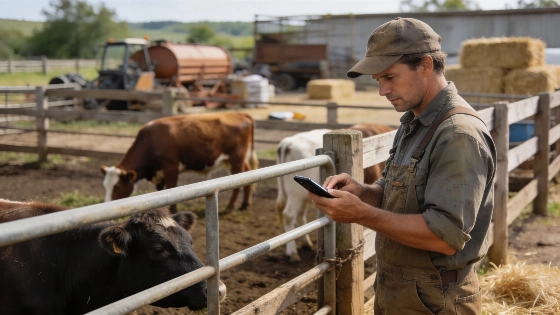
On most farms, animal records end up scattered across notebooks, spreadsheets, and a patchwork of apps. When a calf arrives at sunrise or a treatment gets logged in the middle of chores, the details often land wherever is easiest at the moment. Later, pulling these records together for compliance, taxes, or the vet turns into a tedious job. Digital livestock management software steps in to address this fragmentation.
What Livestock Management Software Does
These platforms give farmers a structured way to record, track, and report on animals through every stage of life. Instead of paper and spreadsheets, users get searchable data that covers animal identification, breeding, health treatments, movements, weight, pasture management, and compliance reporting. Some tools stick to animal records, while others add broader farm management features such as crop tracking and accounting.
For livestock operators in the European Union, digital record keeping is more than a convenience. It’s a regulatory requirement for certain activities. Regulation (EU) 2020/686 from the European Commission Directorate-General for Health and Food Safety requires operators handling germinal products—like semen, oocytes, or embryos—of bovine, porcine, ovine, caprine, and equine animals to keep detailed records and meet strict traceability rules. Each straw or package with these materials must be marked so its contents can be identified during storage and transport. If an animal-health test comes back positive, the animal must be isolated, and germinal products collected since the last negative test can’t move between member states. These rules make it clear why software that preserves searchable identity, health, movement, and reproductive records is vital for both efficiency and compliance.
Key Criteria for Selecting Software
Picking the right software depends on a few factors. The type of farm—cattle-only, mixed-species, or large commercial—shapes which features matter most. Mobile and offline access is crucial for logging records in the field, especially where internet service is spotty. Reporting and analytics can be basic or extend to profitability analysis. Hardware integration, such as scales and EID readers, becomes more important as herds and data grow.
For establishments approved to handle germinal products, software must support keeping records of stored, received, and transferred material, and ensure information stays identifiable through marking and records. This is especially relevant for operations with multiple livestock species, since the EU framework treats record keeping and traceability as related but distinct compliance tasks. The required information follows materials through receipt, storage, movement, and testing, creating a chain-of-custody challenge that digital systems are well suited to handle. Operators should check if software can retain auditable histories and produce records for authorities, vets, and trading partners.
Market Trends and Adoption
The livestock management software market reached $3.2 billion in 2025 and is expected to hit $6.5 billion by 2034, according to MarketIntelo. MarketGrowthReports found that 57% of farm managers use mobile livestock apps for real-time animal tracking, and over 62% of new deployments run on cloud infrastructure. These numbers show a shift toward mobile-first, cloud-based tools that fit fieldwork instead of assuming constant desk access.
Regulations like Regulation (EU) 2020/686 don’t require a specific technology setup, but they do demand that records be accurate, durable, and accessible for compliance checks. So features like offline capture, durable identifiers, exportable reports, and controlled access become practical selection points, even if not spelled out in law. For more on the regulatory framework, see EUR-Lex Regulation (EU) 2020/686.
Comparison of Leading Tools
Seven software options stand out for 2026, each serving different farm needs:
- FarmKeep: Built for small to mid-sized or mixed farms, FarmKeep offers a real free tier and mobile-first record keeping. It’s practical for those moving away from notebooks and spreadsheets, focusing on animal, breeding, and production records. The free plan stays available, with Premium starting at $8 per month on annual billing.
- Farmbrite: Good for mixed farms wanting an all-in-one platform, Farmbrite combines livestock, crops, accounting, and team management. Its range supports diversified operations, with plans starting at $59 per month and a 4.7/5 rating on G2.
- AgriWebb: Designed for ranchers who need mapping and grazing management, AgriWebb features an interactive farm map, offline field capture, and team management. Pricing is quote-based for the base plan, with add-ons for movement and grazing planners.
- Herdwatch: Focused on multi-species field record keeping, Herdwatch supports cattle and sheep management with strong offline features. A free tier is available, and Pro plans start at $49 for the first six months.
- CattleMax: Targeted at cattle-only operations, CattleMax provides full herd, health, breeding, and pasture records with unlimited users. The Commercial plan is $15 per month per account.
- Breedr: For data-driven commercial producers, Breedr integrates traceability and weighing for cattle and sheep. Pricing is based on livestock count, with a Pro plan and an Enterprise option by inquiry.
- CowManager: A sensor-driven system for dairy farms, CowManager uses ear and milk sensors to monitor health and fertility in real time. Pricing is available by quote, reflecting the hardware and software combination.
How to Match Software to Your Farm
Start by deciding if your operation is cattle-only or mixed-species. Cattle-only tools are usually simpler and less expensive, while mixed-farm platforms offer broader features but need more setup. Test mobile and offline features by logging records in the field without a signal to check if data syncs reliably. Consider your need for analytics, hardware integration, and reporting for compliance or breed associations. Free trials and tiers are common, so use them to see if the software fits before paying for a plan.
For operators in the EU or those exporting to the EU, software requirements may differ between a cattle-only farm and one that also handles reproductive material or multiple species. The regulatory text links documentation to establishments receiving, storing, producing, or transferring germinal products, and requires that information stay identifiable through marking and records. This makes interoperability between animal identifiers, inventory records, and movement documentation technically important for compliance.
Practical Considerations for Implementation
When reviewing software, check that it works with your existing hardware, such as scales or EID readers. Make sure reporting features match your compliance and association needs. For teams, unlimited-user models like CattleMax can help cut costs. Always confirm pricing details directly with the vendor, since some plans are quote-based or vary by herd size.
For establishments handling germinal products, confirm that your software can support the record-keeping and traceability obligations in Regulation (EU) 2020/686. This includes marking each straw or package containing semen, oocytes, or embryos so their contents can be identified during storage and transport, and keeping records of all stored, received, and transferred material. If any required animal-health tests come back positive, the animal must be isolated, and germinal products collected since the last negative test can’t move between member states, as stated by the European Commission Directorate-General for Health and Food Safety.
Summary Table of Software Options
#ProductIntentKey DifferentiationPricingG2 Rating1 | FarmKeep | Small to mid or mixed farms | Free tier, mobile-first records | Free; Premium from $8/mo | Not listed
2 | Farmbrite | Mixed farms, all-in-one | Livestock, crops, accounting, team tasks | From $59/mo | 4.7/5
3 | AgriWebb | Ranchers, mapping, grazing | Interactive map, offline capture, team management | Add-ons from $100/yr; base by quote | 4.0/5
4 | Herdwatch | Multi-species field records | Cattle, sheep, pasture, breed-association export | Free tier; Pro $49 first 6 months | Not listed
5 | CattleMax | Cattle-only operations | Complete cattle records, unlimited users | From $15/mo | Not listed
6 | Breedr | Commercial, data-heavy | Traceability, weighing, supply-chain coordination | Pro plan; Enterprise by quote | Not listed
7 | CowManager | Sensor-driven dairy monitoring | Ear and milk sensors, health and fertility | By quote | Not listed
Frequently Asked Questions
What is livestock management software used for? It’s used to record and track animals across their lifecycle, including IDs, breeding, health, movements, weights, and pasture data. This replaces paper records with structured, searchable information for compliance and operational decisions. For operators handling germinal products in the EU, software also supports compliance with record-keeping and traceability obligations under Regulation (EU) 2020/686.
Is livestock management software worth it for small farms? Yes, especially with free or low-cost plans like FarmKeep and Herdwatch. These options let small farms digitize records without major expense.
What should I look for in a cattle management app? Focus on mobile and offline record capture, breeding and health tracking, weight logging, and support for hardware like scales or EID readers. Make sure reporting meets your compliance needs, especially if you must follow traceability and record-keeping rules.
Do these tools work offline in the field? Several tools, including Herdwatch and AgriWebb, support offline record keeping. Always test offline features during a trial to check reliability.
Which software is best for mixed-species farms? Farmbrite, Herdwatch, and FarmKeep all support mixed operations. CattleMax is better for cattle-only farms.
Can livestock software help with weights, breeding, and health records? Most tools track these records. Breedr emphasizes weighing and performance, CattleMax focuses on breeding, and CowManager uses sensors for health and fertility monitoring.
What hardware integrates with livestock management software? Common integrations include weigh scales and EID readers. Check compatibility with your hardware before buying.
How do I choose between free and paid livestock software? Start with a free tier or trial, log real records, and upgrade if you need more features or capacity. Consider whether pricing is per user or flat, especially for teams.
For more details on each tool, check the vendor’s official documentation and pricing pages as of mid-2026. For regulatory requirements in the EU, see Regulation (EU) 2020/686 and guidance from the European Commission Directorate-General for Health and Food Safety.