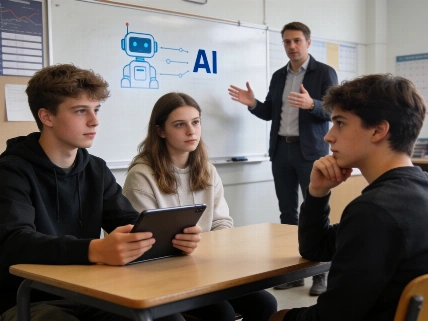
Learning and development (L&D) professionals now face a workplace where artificial intelligence (AI) is woven into daily routines. This shift pushes teams to rethink their main responsibilities and the skills that keep them valuable, especially as AI takes over many content creation tasks. The World Economic Forum’s Future of Jobs Report 2025 points to artificial intelligence and big data as the fastest-growing skills in expected importance between 2025 and 2030. L&D teams are moving closer to the center of workforce adaptation, rather than focusing only on course production. The report estimates that 39% of workers’ core skills will change or become outdated by 2030, which puts pressure on organizations to keep up with ongoing upskilling and reskilling.
Understanding the Changing Role of L&D
With AI taking a bigger role in the workplace, L&D teams are being measured by their impact on business outcomes and how they shape learning inside organizations. Recent research from the 2026 L&D Global Sentiment Survey shows that the initial buzz around AI is shifting toward practical questions about how these tools are actually being used in daily workflows. The World Economic Forum highlights that employers now want development functions that blend technical AI fluency with analytical thinking, judgment, communication, and resilience. This trend supports a move toward continuous, work-integrated learning instead of isolated training sessions.
Moving Beyond Content Creation
As AI tools take over routine content development, L&D professionals are turning to areas where human skills matter most. They set boundaries on training requests, question assumptions about which learning interventions are needed, and look for alternative solutions that address organizational challenges without defaulting to standard courses. Teams that experiment with AI and redesign workflows—rather than just using new tools to copy old processes—stand out. Employers’ feedback shows that AI-related capability is now part of a broader skills portfolio, not a replacement for human expertise. AI and big data, networks and cybersecurity, and technological literacy are among the fastest-growing technical skills. Still, analytical thinking, creative thinking, resilience, leadership, and curiosity remain top workforce priorities.
Demonstrating Business Value and Navigating Analytics
A clear trend is the gap between L&D's push to show business value and a drop in focus on learning analytics. Many teams want to prove their impact on organizational goals, but fewer are prioritizing the data and analysis needed to back up those claims. This tension points to a need for L&D professionals to build stronger analytical skills and use evidence-based methods to evaluate learning initiatives. The World Economic Forum reports that analytical thinking is the most sought-after core skill among employers, with about seven in ten employers calling it essential. Resilience, flexibility, and agility follow at 67%, while leadership and social influence are valued by 61% of employers. Creative thinking, motivation, self-awareness, empathy, and active listening also rank high, showing that organizations are pairing technical skills with judgment and interpersonal effectiveness.
Essential Skills and Mindsets for the Future
To stay relevant in the coming years, L&D professionals will need a mix of technical and human-centered skills. Adaptability, critical thinking, and the ability to set clear priorities are becoming more important as resources stay tight and team demands grow. Human skills—like communication, empathy, and creative problem-solving—are expected to gain value as AI handles more routine learning tasks. The World Economic Forum’s research shows that about half of the workforce has completed training through L&D programs, up from 41% in the previous edition. Yet, sectors such as telecommunications and information-technology services expect over 60% of their staff to need more training by 2030. This signals a move from one-time reskilling campaigns to ongoing capability development. The Forum also suggests "buy, build, borrow" strategies for organizations aiming to become AI-ready, with the "build" approach focusing on continuous learning and practical chances for employees to oversee AI deployment.
Expert Insights and Further Exploration
Donald H. Taylor, a recognized leader in the L&D field, has contributed substantial research on these trends through the Learning Research Series. His work offers practical guidance for professionals navigating technological change and aiming to show their impact. For readers interested in related developments, this earlier report looks at how AI-powered chatbots support personalized learning in digital environments.
L&D teams that experiment, focus on human skills, and use data to guide their strategies will be best placed to succeed as AI continues to change workplace learning. For a broader look at workplace skills gaps and how AI is used and viewed across high-growth industries, the Imperial College London study examines lifelong learning and the link between employee attitudes, workplace adoption, and changing skill requirements.