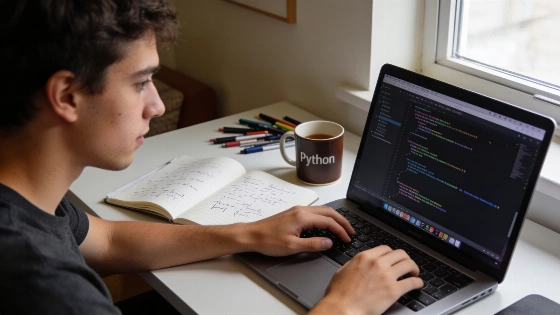
Many new programmers overlook how much steady, focused practice can change their skills. Passive tutorial watching rarely leads to real progress. Instead, spending an hour each day on active coding steadily builds a beginner’s grasp of Python over twelve weeks. This method centers on hands-on work, guiding learners from recognizing syntax to writing working programs on their own.
Structuring Your Daily Python Practice
Setting up a clear routine is the first step to learning well. Start each session by spending fifteen minutes on a single new concept. For example, learn how a while loop functions or what sets a Python dictionary apart. Skip the urge to tackle whole chapters or playlists—stick to one idea and master it before moving on.
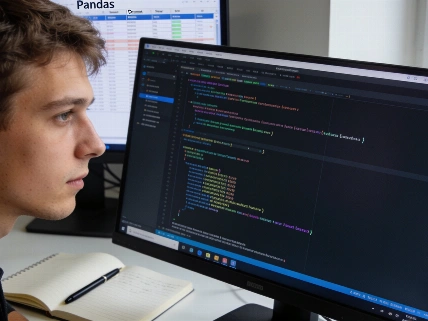
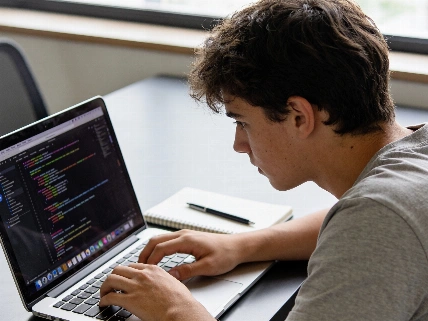
Use the next forty-five minutes to write code that puts the new idea into action. Type out programs by hand, try different approaches, and purposely add mistakes to see what breaks. Debugging and fixing these errors is where you really learn. Keep a notebook for bugs that take longer than five minutes to solve. At the end of each week, review your notes to spot patterns and reinforce what you’ve learned.
This practical method matches the flow of the official Python tutorial, which introduces syntax and programming basics in a step-by-step order. The Python Software Foundation’s documentation covers control flow, data structures, modules, input and output, errors and exceptions, and classes. The tutorial serves as both a technical reference and a learning path, helping beginners and those moving to intermediate skills build up their knowledge gradually.
Week-by-Week Python Learning Roadmap
The twelve-week plan breaks down into focused parts, each building on the last. In the first two weeks, work on variables, numbers, strings, input/output, and basic conditionals. Make small programs like a temperature converter, a tip calculator, or a vowel counter. By the end of this stretch, you’ll have finished about fifteen short projects, with the focus on getting working code rather than making it fancy.
Weeks three and four bring in lists, dictionaries, and loops. Practice by creating a shopping list manager, a word-frequency counter, or a contact book using dictionaries. Loops might seem tricky at first, but repeated coding makes them easier to use. The official Python documentation covers these topics directly, so it’s a solid place to check your understanding and test your code.
For weeks five and six, turn to functions, file operations, and error handling. Break bigger programs into functions, read and write text files, and use try/except blocks to handle unexpected input. A good project here is a personal expense tracker that saves data to a file and totals up weekly spending. The aim is to finish a working program, even if it’s rough around the edges.
Object-oriented programming comes in during weeks seven and eight. Learn to define classes and make objects, starting with simple models like a BankAccount or a Student with grades. Two weeks is enough to get the basics before moving to tougher topics as needed. The official tutorial’s staged approach supports this, and resources like DataCamp point out its value for building core skills.
In weeks nine and ten, dig into Python’s standard library modules such as datetime, random, os, and json. Put your skills to work by building a complete project—try a quiz app, a file organizer for your downloads, or a basic web scraper for a favorite site. Finishing a full project teaches more than starting several that never get done.
The last two weeks are for recall and mastery. Go back to earlier programs, close your notes, and rewrite them from memory. Any trouble you hit shows where you need more practice. Wrap up by rebuilding your week six expense tracker from scratch, then compare it to your first version to see how far you’ve come.
What You Will Achieve After Twelve Weeks
By following this plan, you’ll have a strong grip on Python basics, a set of fifty to sixty programs you wrote yourself, and two finished projects. You’ll also be able to write small Python programs without needing tutorials. This base makes it easier to handle interviews, take on bigger projects, or pick up another programming language later. Consistent, active practice—one hour a day spent writing and debugging code—builds real programming skill.
Python’s popularity shows in the 2026 Stack Overflow Developer Survey, which gathered 30,903 valid responses from 169 countries. The survey found that 58.0% of respondents used Python in the previous year, and 39% used it for artificial intelligence work. These numbers show Python’s strong role in current software and AI projects, making it a valuable tool for new programmers.
As you move forward, keep in mind that writing, checking, and debugging your own code is key for deep learning. A 2026 systematic review of 45 empirical studies on generative-AI in programming education stressed that "assistance is not understanding" and advised learners to actively find, fix, and explain errors in code. Deliberate practice and keeping a debugging notebook help make your skills solid and ready for new challenges.