Professionals often struggle to turn what they know into skills that last, especially while juggling deadlines and daily work. Julie Dirksen, a learning-strategy consultant who brings behavioral science into learning interventions, wrote Design for How People Build Skills, Design for How People Learn, and Talk to the Elephant. She designs learning systems for both industry and academia, focusing on how learning design can drive real skill development in the workplace (UPCEA 2027 DT&L Conference).
Understanding the Barriers to Skill Building
Many employees hit roadblocks when trying to move from knowledge to actual capability. These obstacles can include limited time for practice and a lack of feedback or chances to apply new ideas. Dirksen's work points to the need for identifying these challenges so learning efforts can work better. Clark Quinn, a learning-technology commentator, uses the COM-B framework—capability and opportunity—to look at this issue. He notes that learners may also need confidence in their competence and commitment to use new skills, beyond just opportunities and feedback (Learnlets commentary).
Learning Design That Supports Growth
Good learning design helps people build and keep new skills. Using behavioral science and practical tools, Dirksen helps organizations create environments where behavior change can take root. Her approach focuses on strategies trainers and L&D professionals can use to support ongoing skill growth. Her earlier book, Design for How People Learn (New Riders, 2012, 259 pages, ISBN 978-0-321-76843-8), covers learning goals, memory, motivation, learner skill levels, and the settings where learning happens. This work lays the groundwork for her later focus on skill acquisition (Information Research review).
Practical Strategies for Lasting Skills
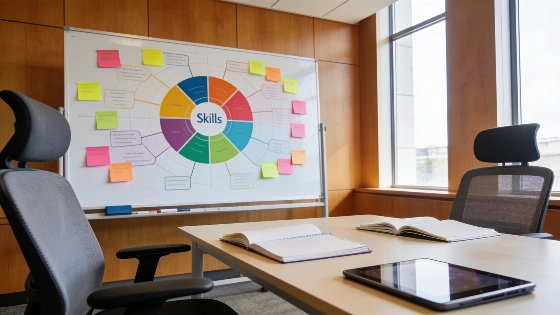
Dirksen's latest book, Design for How People Build Skills, gives practical ways to turn knowledge into action. These include mapping out the skills needed for a role and designing practice opportunities with feedback that pushes improvement. Her work highlights the need to help learners see what they can do with new knowledge or skills and to design experiences that help them feel capable as they learn. The 2027 UPCEA Digital Teaching and Learning conference features Dirksen as a general-session speaker on "Behavioral Science for Better AI Use." She discusses starting with pedagogy, keeping learner judgment, and designing the full practice loop—preparation and AI interaction, feedback, reflection, and repeated practice—in digital environments (UPCEA 2027 DT&L Program).
Expert Perspectives in Learning and Development
David Kelly, a learning-and-development figure with the Learning Guild, joins the discussion about moving from skill maps to skill building. He explores how people develop skills while handling deadlines and competing responsibilities. His views on the intersection of learning and technology add to Dirksen's focus on skill building. For those interested in broader approaches to interactive training, the reported earlier guide looks at how to create engaging customer training programs using digital tools.
Applying These Ideas in Practice
L&D professionals, educators, and independent learners need to know how to design learning experiences that drive real skill growth. By focusing on practical application and feedback, along with ongoing support, people can move from knowing what to do to actually doing it well in their roles. Dirksen says, "Practice is where people go from what to how," pointing to the shift from knowledge transfer to applied capability and performance-system design.