Many students, when asked about using artificial intelligence in school, first think of it as a way to make assignments easier or finish tasks faster. For Treasure Aghedo, a freshman at College of Alameda in Oakland, joining KQED’s GenAI Student Advisory Team changed that outlook. The experience led to a closer look at how AI can support independent thinking and real learning, rather than simply taking over. This matches the push for AI literacy in education, which the U.S. Institute of Education Sciences describes as the knowledge and skills needed to use artificial intelligence properly in schools. Federal education researchers urge schools to go beyond technical training and include direct lessons on ethical use, source evaluation, authorship, privacy, and the line between help and substitution (AI literacy policy options).
From Shortcuts to Support
Before joining the advisory team, Aghedo often used AI for assignments, especially when motivation dropped. The ease of AI tools made it tempting to lean on them for quick solutions. But as the program went on, a key question surfaced: What learning actually happened without relying heavily on AI? This moment of reflection brought a clearer sense of the role AI should play in education. Recent research in higher education shows that direct instruction about AI can sharply boost both awareness and use: one intervention study found students' awareness of ChatGPT rose from 90.7% before instruction to 96.7% after, and the share using ChatGPT for academic work jumped from 37.2% to 76.7% (ERIC study on AI literacy).
Building AI Literacy Through Practice
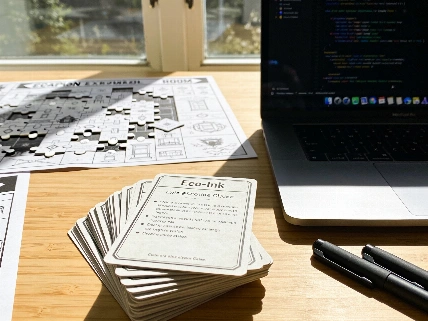
The most meaningful part of the program involved writing about personal experiences with AI in education and weighing its pros and cons. Students then worked in groups to design lesson activities on AI topics. Aghedo’s group created a game to help classmates tell the difference between AI-generated and human-made images and text. By teaching this lesson to peers, participants learned to spot subtle signs in AI output and to question information sources. This hands-on method showed why students need chances to analyze, challenge, and share their own ideas—skills that go further than just using AI tools. Federal guidance backs these methods, recommending that schools set clear academic integrity rules and discuss the ethical sides of AI in the curriculum (AI planning protocols).
Responsible AI Use and Academic Integrity
As AI becomes more common in classrooms, concerns about academic integrity and independent learning have grown. Previous coverage, such as reported earlier, has looked at how misuse of AI can damage trust and motivation. Aghedo’s experience supports the idea that AI should help deepen understanding, not let students skip the learning process. Brainstorming and reviewing concepts are useful ways to use AI, but letting AI generate ideas or write entire assignments can weaken a student’s unique voice and critical thinking. Studies on digital citizenship curriculum describe generative AI as having a "dual edged nature" in education, pointing to risks like academic dishonesty, plagiarism, copyright issues, misleading information, and uneven understanding of AI tools. Still, the research cited in these studies shows little evidence of widespread academic-dishonesty cases, though the risk of misuse remains a real concern.
Shifting the Focus to Growth
Aghedo’s time with the GenAI Student Advisory Team shows that learning goes beyond finding correct answers. It means building confidence, understanding, and the ability to share personal insights. By designing and teaching AI-focused lessons, students can gain both technical skills and self-awareness. The experience makes clear that, when used with care, AI can serve as a strong educational tool if it supports genuine learning and self-expression. Federal education policy, including Executive Order 14277 signed in April 2025, now calls for balancing the benefits of AI in education with risks like cyberbullying, data privacy, and bias, stressing responsible use and civil-rights protection (U.S. Department of Education FY 2026 report).