When customers struggle to use products as intended, organizations often see frustration, more support tickets, and sometimes even product abandonment. Tackling this issue takes more than static tutorials. Interactive customer training can turn onboarding and ongoing education into a hands-on learning process that keeps users engaged and helps them get real value from your product. Research cited by ExpertusOne shows that proactive customer education cut first-week churn by half and dropped first-week support questions by 19.55%. Trained customers used the service 46.57% more over the next eight months, showing how interactive education boosts long-term engagement and product use (ExpertusOne customer training guide).
What Makes Customer Training Interactive?
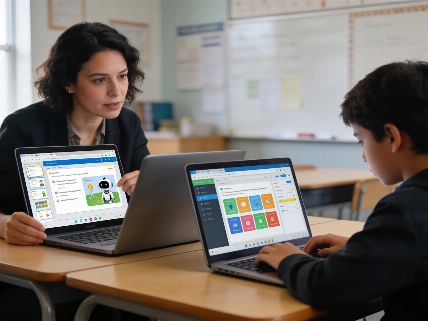
Interactive customer training goes further than passive content by involving users in hands-on activities. Instead of just reading instructions or watching videos, learners work through simulations, branching scenarios, quizzes, and exercises that reflect real product workflows. This setup lets customers try things out, make choices, and learn from mistakes in a safe space. They build confidence and independence. A meta-analysis of 65 studies with 6,476 trainees found that those using computer-based simulation games scored 11% higher on factual knowledge, 14% higher on skill-based knowledge, and 9% higher on retention compared to traditional learning methods (simulation learning research).
Building Scalable Training With iSpring Suite and iSpring LMS
The eBook "How To Build Interactive Customer Training" from iSpring Solutions offers practical steps for organizations that want to create scalable, engaging customer education. The guide shows how to use iSpring Suite to design courses with clickable product demos and personalized learning paths. It also explains how to deliver these courses through iSpring LMS, which tracks learner progress and automates communication with users.
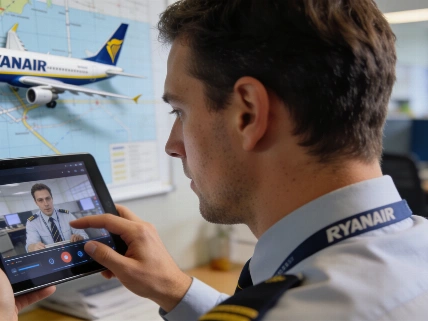
Teams aiming to improve their training approach will find details in the eBook on adding interactive elements to customer education programs. Examples include scenario-based exercises that mirror common product challenges and quizzes that reinforce key ideas. These features help organizations shift from one-time onboarding to ongoing learning that supports long-term customer success. The INAIR project, funded by the EU, showed how modular, personalized, and interactive learning supports technology adoption: among more than 240 registered users, 88% reported better understanding of AI in retail, 85% felt more confident about considering or adopting AI solutions, and 72% planned to use AI tools or approaches in their work (European Commission CORDIS).
Why Interactive Training Matters for Businesses
Strong customer education eases the load on support teams and helps more users adopt products. By letting users practice real tasks and get instant feedback, interactive training helps customers become more self-reliant. This cuts support costs and builds customer loyalty by showing a real commitment to user success. Research summarized by ExpertusOne found that customer-education programs led to a 26.2% jump in customer satisfaction, a 35% rise in average lifetime value per trainee, and a 7.6% revenue increase for products targeted by training. Also, 86% of organizations saw a positive return on investment from customer education, and 96% at least broke even on their programs.
Organizations looking to build a full training program can find more strategies in resources like the employee training video guide, which covers effective video-based learning for workplace skills.
What the eBook Covers
- The business case for customer training and its impact on retention
- Step-by-step instructions for designing interactive courses in iSpring Suite
- Practical examples of using iSpring Suite features in real training scenarios
- Guidance on setting up and managing training in iSpring LMS
"How To Build Interactive Customer Training" is available for download and gives actionable advice for designing, delivering, and managing interactive learning experiences that help customers get better results with your products.