Running communication and training for Ryanair means tackling hurdles that most airlines never encounter. Ryanair Holdings plc, which owns Ryanair DAC, Buzz, Lauda, Malta Air, and Ryanair UK, operates as a multi-brand European airline group. The group moves about 214 million guests each year, runs roughly 3,800 daily flights from 95 bases, serves close to 220 airports in 34 countries, and manages a fleet of nearly 650 aircraft. Ryanair aims to reach 300 million passengers annually by fiscal year 2034, backed by an order for 300 new Boeing 737 aircraft Ryanair Corporate Profile. With this scale and ambition, Ryanair needed a way to keep travelers and staff informed and ready, without letting logistics slow down its operations.
Why Communication and Training Became a Bottleneck
When a Ryanair flight faces disruption—due to weather, air-traffic-control strikes, or unexpected events—the airline must quickly update affected passengers about the situation and next steps. Previously, making a single update video took at least an hour, sometimes longer. The process relied on outdated equipment, volunteer presenters, and manual editing. Language barriers added to the challenge. Many Ryanair passengers do not speak English as their first language, so localizing updates meant searching for colleagues fluent in Italian or French. Often, updates went out in English only, which limited their reach and impact.
Employee training ran into similar problems. Ryanair's old approach meant flying instructors across Europe or moving trainees between bases, which drove up travel and accommodation costs. Each year, about 1,300 of the airline's 3,000 engineers train at 13 European bases. Online options like static PowerPoint presentations failed to engage learners or guarantee consistent instruction.
Implementing Synthesia's AI Video Platform
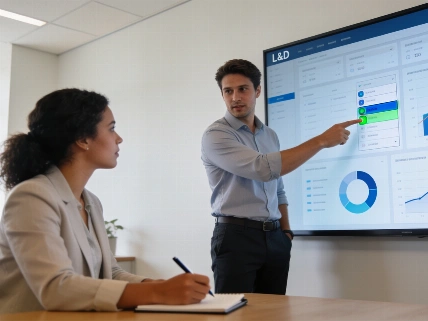
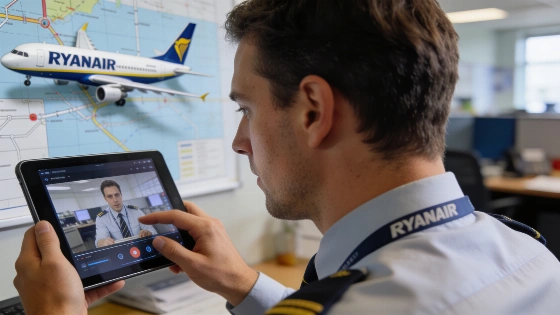
To solve these issues, Ryanair adopted Synthesia, an AI video platform. The customer service team built video templates for common disruption scenarios. When an incident happens, they update the script, adjust airport-name pronunciations, and generate a new video. This video goes out to affected passengers through the Ryanair app, available in every European language with a single click.
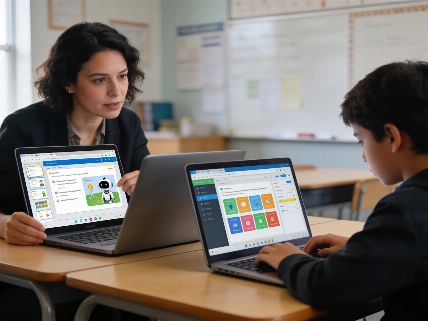
For employee training, Ryanair's GenAI team brought in lifelike avatars using Synthesia. Instead of repeating lessons in person, a real instructor records a session once. The AI avatar then delivers consistent training to every learner, on any device, at their own pace. This method preserves expert knowledge and removes the need for repeated travel and classroom sessions.
Results: Faster Updates and Scalable Learning
Disruption videos that once took over an hour to produce now reach passengers up to 90% faster. Ryanair can now communicate with every traveler in their own language as soon as an issue comes up. The airline has seen higher customer satisfaction scores during delays, and its approach to passenger communication has set a standard that competitors have started to follow.
Switching engineer training from in-person sessions to AI-powered video has led to six-figure savings, which Ryanair puts back into further training. The same approach now supports training for 15,000 cabin crew and standardizes procedures for 22,000 ground agents in 20 languages. Internal communications, product rollouts, and executive updates have also moved to this scalable video model.
Educational Takeaways for Large-Scale Operations
Ryanair's experience shows how AI video platforms like Synthesia can help organizations get past the limits of traditional communication and training. By automating video creation and localization, companies can reach more people in more languages with consistent information, without adding staff or relying on manual processes. For educational leaders and training managers, this case points to the practical benefits of using AI-driven video in large-scale learning and communication workflows.
Alongside AI video, Ryanair has invested in other digital training tools. The airline signed a five-year agreement with Visionary Training Resources to use FlightDeckToGo, a virtual reality flight-deck trainer for Boeing 737NG cadets. This VR system teaches trainees through "Learn" and "Practice" stages and has shown statistically significant improvements in core competencies after a six-month evaluation with over 1,000 cadets Halldale aviation training report.
Ryanair’s ongoing digital transformation, supported by its large-scale fleet expansion and technology adoption, puts the group in a position to reach its goal of carrying 300 million passengers annually by FY34 while maintaining operational efficiency and high standards in both passenger communication and employee training.