When a machine jams or a process shifts, the difference between a written rule and what happens on the floor stands out. Compliance training usually covers the standard, but incidents often stem from details unique to each machine or site. For organizations with varied operations, the real challenge is keeping training relevant as equipment and procedures change.
Why Generic Compliance Training Falls Short
Most off-the-shelf compliance courses stick to the shared rule—such as OSHA's Control of Hazardous Energy standard—without getting into the specifics of your equipment or workflows. OSHA’s standard, found at 29 C.F.R. § 1910.147, covers servicing and maintenance where unexpected energization, startup, or release of stored energy could injure employees. The regulation requires employers to set up an energy-control program with written procedures, employee training, and periodic inspections. It separates authorized employees who perform lockout or tagout from affected employees who operate or work near equipment, and from others whose work may occur in controlled areas. These courses may be affordable and quick to deploy, but they rarely match the actual steps your staff must take. Building custom training in an authoring tool or with AI can capture your procedures, but every operational change triggers another update cycle. Even with AI, keeping training accurate over time remains difficult.
Structuring Compliance Training for Real-World Operations
To keep compliance training current and useful, start by splitting the universal rule from local procedures. Build a core course that covers the standard requirements—such as the six steps of lockout/tagout—and keep machine-specific details in short, focused modules. Each module should come straight from the procedure for a particular machine, site, or product. This way, when a procedure changes, only the relevant module needs updating, and only affected employees need retraining. OSHA’s framework treats written procedures, employee roles, training, and periodic verification as parts of a single program, not as isolated course content. This means compliance depends on accurately applying an energy-control procedure to a specific machine and task, not just knowing the general rule.
Turning Procedures into Practical Learning
Effective compliance training does more than drill rules. Turn each procedure into a scenario that pushes learners to make decisions, including tempting but wrong choices. For example, when a conveyor jams, the operator might think about hitting the emergency stop instead of doing a full lockout. The scenario should prompt the learner to check the actual procedure and see what each action leads to. This method tests real understanding and decision-making, not just recall. Lockout/tagout addresses a recurring operational risk: workers may face electrical, mechanical, hydraulic, pneumatic, chemical, thermal, or gravitational energy while servicing equipment. Training that reflects these real-world risks helps close the gap between policy and practice.
Keeping Training Aligned with Operations
Keeping compliance training up to date takes a system that links each module to its source procedure. When equipment is swapped out or a process changes, update the procedure, regenerate the module, and assign it only to those who need it. This targeted approach avoids retraining entire teams unnecessarily and keeps records clear about who was trained on which version of each procedure. In platforms like Claro, modules can be regenerated one at a time, making updates easier. OSHA’s official framework matters for modular training because changes to machinery or procedures can alter the controls employees must follow, so training content must be checked against both current OSHA requirements and the employer’s latest machine-specific procedures.
Managing the Compliance Training Cycle
Compliance standards often call for annual reviews of procedures and employee responsibilities. Before inspections, assign each person the modules that fit their work. If an inspection finds a missed step, retrain only the affected crew on that specific machine. Track completion by module and procedure version, so you know exactly who passed which training and when. Digital learning systems that support SCORM or xAPI can record scenario answers and completion data for your learning management system. OSHA’s hazardous-energy rules set a regulatory baseline that organizations must turn into equipment-specific procedures, so keeping accurate records and targeted retraining is key for ongoing compliance.
Human Oversight and Practical Limitations
AI and digital tools can draft and update training modules, but human review is still necessary. Automated systems may introduce mistakes, such as quoting nonexistent clauses or misapplying exemptions. Each procedure owner should review scenarios to confirm that the "right" answer matches the actual requirements for their equipment. Hands-on practice is also required—OSHA does not accept online training alone as enough for compliance. Supervisors must watch employees perform procedures on real machines. This confirms that employees can apply written procedures in practice, as OSHA’s energy-control program requires.
Practical Tips for Implementation
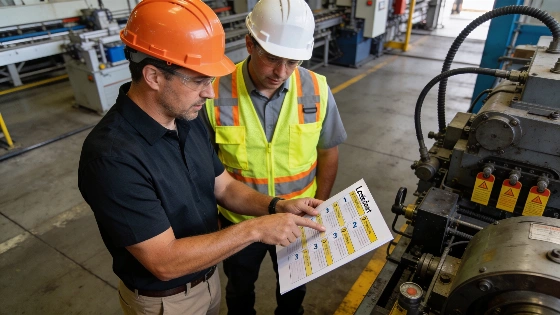
Before generating modules, add photos of isolation points and clear, step-by-step instructions to each procedure. Make sure every statement in a module can be traced back to the procedure. Avoid vague language and invented policy details. When using AI tools, tell them to reference only the supplied procedure and not to fill gaps with generic best practices.
Organizations aiming to improve digital skills and compliance processes can use modular, scenario-based training in other areas too. For example, knowing how to structure learning content for changing requirements matters in compliance and in programming, as covered in our recent guide on Python indentation. For more on structuring compliance training from policy documents, see this practical overview.