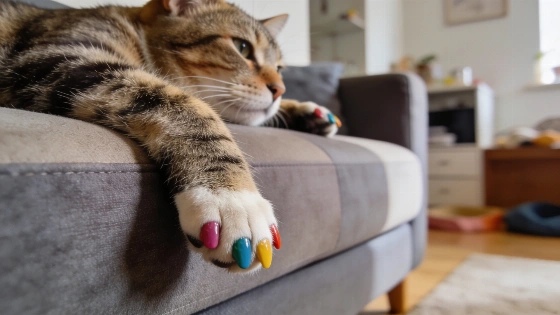
Scratching comes naturally to cats, but it often leaves behind damaged furniture, torn clothes, or accidental injuries to people and pets. Many cat owners look for a humane way to limit this damage, and nail caps provide one such option. These soft, small covers slip over a cat’s claws, letting the cat extend and retract them as usual while stopping destructive scratching. When fitted correctly, nail caps blunt the claw tips without removing them or blocking the cat’s normal scratching motion. Veterinary guidance points out, “They do not remove the nail and they do not stop the natural urge to scratch.”
How Nail Caps Work and Who Should Consider Them
Nail caps attach to a cat’s trimmed claws with glue. Once in place, they usually stay on for four to six weeks before shedding naturally as the claw grows. Owners should trim claws before applying caps and pick the right size to avoid pressure as the claw grows. Caps that are too tight, or left on as the claw grows underneath, can cause pressure injuries. Weekly checks help spot fit issues, displacement, redness, swelling, licking, or limping, as Runye Pet guidance recommends.
Cats can still stretch and flex their paws and go through scratching motions, but the caps keep sharp claws from damaging surfaces or skin. Nail caps make the most sense for indoor cats in homes where scratching leads to property damage or a risk of minor injury to people or animals. They do not replace environmental or behavioral management, since scratching remains a normal feline behavior even with covered claws. Scratching posts and enrichment are still needed to address the urge to scratch. Veterinary guidance notes, “They are not a substitute for scratch-friendly enrichment.”
Owners might use nail caps to protect household surfaces, lower the risk of injury to children or vulnerable adults, or prevent self-inflicted wounds in cats that scratch due to anxiety or skin issues. Hairless cats or those with sensitive skin may also benefit from this extra protection. Nail caps work best when the cat tolerates handling, has healthy claws and paw pads, and lives in a setting where duller claws improve safety or protect property.
When Nail Caps May Not Be Suitable
Nail caps do not fit every cat’s needs. Outdoor cats depend on their claws for climbing and self-defense, so covering them could put these animals in danger. For indoor cats, the main issue is not claw function but how well the caps are applied and monitored. Cats that resist application, chew at the caps, or show distress may need a different approach. If a cat appears distressed, owners should consider other options.
Guidance highlights several situations where nail caps should not be used without a vet’s input, such as existing claw, quick, or paw-pad problems. Caps over a damaged claw can hide an underlying issue and delay detection of infection, inflammation, trauma, or a broken claw. Warning signs include redness, swelling, heat, discharge, foul odor, bleeding, limping, persistent licking, or a cap sitting at an odd angle. If any of these appear, a veterinary exam is advised, since nail-bed and toe problems can worsen and cause pain.
Key Features to Evaluate When Selecting Nail Caps
When picking nail caps, focus on these factors:
- Size: Choose a cap size that matches your cat’s weight for a secure fit. Avoid caps that are too tight, as poor sizing can cause discomfort or injury.
- Material: Most caps use non-toxic vinyl resin, which is safe if swallowed.
- Quantity: Kits differ in the number of caps included, so check how many applications you’ll get.
- Color: Clear caps are less visible, while colored or glitter options are easier to spot if lost.
Comparison of Leading Cat Nail Cap Products
Several brands sell nail caps with different features and prices. Here are five options that meet common safety and usability standards:
- Soft Claws Cleat Lock System: Uses a cleat lock design for secure placement, includes 40 caps, two adhesive tubes, and six applicator tips. Available in various sizes and colors, these caps are veterinarian-developed and made from vinyl resin.
- Joyous Nails Caps: Offers a large set of 160 caps with eight adhesive tubes and sixteen applicator tips. The caps are flexible and come in many colors, making them a budget-friendly pick.
- Purdy Paws Soft Nail Caps for Cats: Made for kittens and small cats, these caps are soft and comfortable. Sets include either 20 or 40 caps, two glue tubes, and applicator tips, with glow-in-the-dark and glitter options.
- Zepto Cat Claw Covers: Good for small cats, this kit has 100 caps, five glue tubes, and ten applicator tips. Over fifty color choices are available, including glow-in-the-dark versions.
- VICTHY Cat Nail Caps: Designed for larger cats, this set has 140 caps, seven adhesive tubes, and a plastic carry case. The caps are rubbery and flexible, with sizes for cats up to 22 pounds.
Applying Nail Caps Safely and Effectively
Applying nail caps takes patience and preparation. Trim your cat’s claws first, then use the adhesive from the kit. Some owners get help from another person or apply the caps when the cat is calm or sleepy. Positive reinforcement, like treats or gentle praise, can help cats get used to the new feeling. Watch your cat after application to check for comfort and any signs of irritation.
If applying nail caps at home is too difficult, many groomers and veterinarians offer this service. The main risks in clinical settings come from poor fit, glue in the wrong place, caps slipping and trapping moisture, or an existing nail problem, as veterinary guidance from Designer Mixes notes.
Maintenance and Monitoring
Nail caps need regular checks and replacement, usually every four to six weeks. If a cap falls off or a claw grows out, replace it quickly to keep protection in place. Owners should combine proper application with regular inspections and quick attention to any paw or claw problems. Always watch for signs of discomfort or trouble walking, and ask a veterinarian about safety or fit if needed. When sized and applied correctly, soft nail caps are generally safe for many cats.
Nail Caps vs. Declawing
Nail caps offer a non-surgical, reversible alternative to declawing (onychectomy). Declawing removes the third bone of each toe, changing the paw’s structure and mechanics. This surgery can cause chronic pain, altered gait, more biting, and litter-box avoidance. Veterinary guidance, including from Runye Pet, notes that the American Veterinary Medical Association discourages declawing as a routine elective procedure. Nail caps do not permanently change a cat’s claws and must be reapplied as caps shed or claws grow, dulling the claw tip while letting the cat stretch and scratch naturally.
For more detailed veterinary guidance, see Designer Mixes: Soft Nail Caps for Cats and Runye Pet: Cat Nail Trimming.