People with fair skin often find self-tanning products unpredictable, which can make it tough to get a natural look. Many formulas leave pale skin with streaks, patchiness, or an orange cast if the undertone or active ingredient level doesn't suit lighter complexions. The U.S. Food and Drug Administration (FDA) lists dihydroxyacetone (DHA)—the main active in most self-tanners—as a color additive allowed for external cosmetics under 21 CFR 73.2150. DHA isn't classified as a drug, so manufacturers must ensure product safety and correct labeling. The FDA limits DHA to external skin, banning use on the eye area, lips, or mucous membranes, and doesn't approve products for inhalation. This matters for facial tanning drops and spray or mist products, where users should avoid sensitive areas and prevent inhaling the product.
Understanding Self-Tan Ingredients and Fair Skin
Most self-tanners use dihydroxyacetone (DHA) to create a temporary tan. Kseniya Kobets, MD, director of cosmetic dermatology at Montefiore Einstein Advanced Care, points out that DHA concentration and how color develops over time are especially important for very fair people. She notes, "Very fair individuals (Fitzpatrick I–II) are more prone to looking overly yellow or sallow because the self-tanning ingredient DHA creates melanoidins that skew more yellow, compared to the balanced red and yellow tones of a natural tan from ultraviolet light." Lower-strength DHA (about 3–5%) or gradual formulas help build color slowly and lower the risk of unnatural results. Industry reviews, including a 2018 summary in the Journal of Drugs in Dermatology, show that most self-tanners on the market use DHA concentrations in the 3%–5% range. Gradual or lower-strength products are usually at the lower end, while darker or faster-developing formulas use higher concentrations. A higher DHA percentage can give deeper color but also raises the chance of uneven or too-strong results, especially on fair skin.
DHA reacts with amino acids in the skin's outer layer, producing brown pigments without ultraviolet exposure. Color starts to show in about an hour, reaches its peak in 8–24 hours, and fades over 5–7 days as pigmented skin cells shed. This explains why dry or unevenly exfoliated spots can turn darker and why adding more product too soon can make unwanted color stronger.
Recommended Self-Tan Lotions for Fair Skin
Some products are made to meet the needs of fair skin. The following options stand out for delivering subtle, gradual color and reducing common problems:
- St.Tropez Gradual Tan Firming Lotion – Seen as a top overall pick, this lotion fits easily into a routine and includes ingredients that help keep skin hydrated.
- Bondi Sands Everyday Gradual Tanning Milk Body Moisturizer – A budget-friendly drugstore choice that lets color develop gradually.
- Tanologist Hydrating Daily Glow Body Lotion – Good for dry skin, this lotion combines tanning and moisturizing effects.
- Isle of Paradise Self-Tanning Drops – Suitable for the face, these drops can be mixed with moisturizer for custom color. When using facial tanning drops, avoid the eye area, lips, and mucous membranes, following FDA advice for external use only.
- Saltyface Tanning Moisturizer – Made for sensitive skin, this product aims to reduce irritation while giving a gentle tan.
- Jergens Natural Glow +Firming Self-Tanner – A solid starting point for beginners, this lotion offers gradual color and added firming ingredients.
Tips for Achieving a Natural Self-Tan on Fair Skin
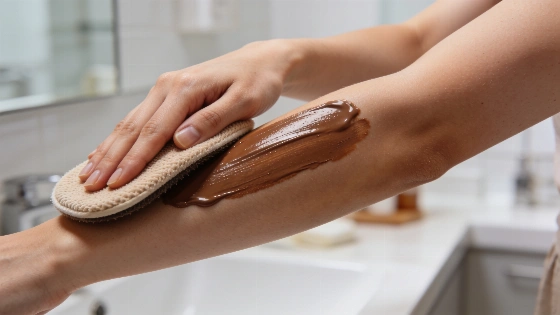
To avoid streaks and uneven color, apply self-tanner to clean, exfoliated skin and use a mitt or gloves for even coverage. Dermatology guidance suggests exfoliating before self-tanning, especially on thicker or rougher spots like elbows, knees, and ankles, to remove loose surface cells that can soak up product unevenly. Apply the product in sections, blending carefully around wrists and ankles, and avoid using thick layers before the color develops. Gradual formulas give more control, letting users build color over several days. Watch areas that tend to absorb more product, such as elbows, knees, and ankles, and blend well to prevent darker patches.
The American Academy of Dermatology advises waiting at least 10 minutes before dressing after applying self-tanner and wearing loose clothes during the first stage to limit transfer and early removal. It's also important to follow the manufacturer’s instructions about showering, sweating, swimming, and development time. Early color may look lighter before it fully develops, so gradual, careful application is better than adding more product right away.
For spray or mist self-tanners, the FDA tells consumers to protect their eyes and mucous membranes and avoid inhaling the product, since these are not approved for those areas. This is especially relevant for fair-skinned users who may be more sensitive to product buildup or uneven results.
Self-tanners do not protect against ultraviolet radiation. U.S. labeling rules require tanning products without sunscreen to carry a warning: “This product does not contain a sunscreen and does not protect against sunburn.” The American Academy of Dermatology stresses that there is no safe way to tan through ultraviolet exposure and recommends self-tanning products as a cosmetic alternative to intentional tanning. People using self-tanner should keep using sunscreen, since the artificial color does not block UV rays.
Expert Insights and Testing Approach
Expert input from Kseniya Kobets, MD, Audrey Spina, and Geeta Yadav, MD, shaped the evaluation of these products. The recommendations rely on product testing, ingredient review, and attention to common concerns for fair skin, such as undertone match and sensitivity. Guidance from the American Academy of Dermatology and FDA regulatory positions inform best practices for safe and effective self-tanning.
Frequently Asked Questions
- Which self-tanner is best for fair skin? Products with lower DHA concentrations (usually 3%–5%) and gradual color development tend to work better for fair skin.
- How can I make my self-tan look natural? Use gradual formulas, exfoliate before applying, apply evenly in sections, and build color slowly for a more believable look. Wait at least 10 minutes before dressing and wear loose clothes during the first stage.
- What undertones should I look for? Subtle undertones that avoid strong yellow or orange are better for pale complexions.
- Does self-tanner protect against sunburn? No. Self-tanners do not provide sun protection. Always use a separate sunscreen, as required by FDA labeling rules.