Universities often struggle to give students meaningful laboratory experience while keeping spending on equipment and maintenance in check. Blended science courses step in by pairing online learning with in-person experiments, letting students build technical skills and helping institutions keep budgets under control.
What Are Blended Science Courses?
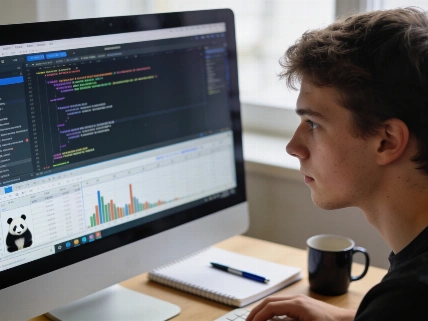
Blended science courses bring together virtual labs and physical laboratory sessions. Students work through online simulations to learn procedures, explore scientific concepts, and get familiar with lab instruments before entering a real lab. This setup lets students review steps, see how equipment operates, and get ready for hands-on work.
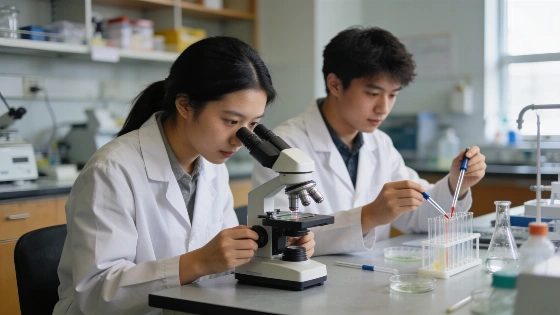
Once in the physical lab, students put their online learning into practice. They handle instruments and prepare samples, then interpret experimental results. This structure makes the most of limited lab time and ensures students get real experience with equipment.
Large-scale online training platforms now play a bigger role in digital preparation. The Microbiology Galaxy Lab, featured in Communications Biology in October 2026, offers a community-driven set of tools, workflows, and computational infrastructure for accessible and reproducible microbial research in health and environmental fields, as well as agriculture, food, and One Health. The platform includes more than 35 tutorials and learning paths, plus workshops, hackathons, and online seminars. These resources help scientists and students deepen their skills in microbiological data analysis. The publication notes, "Microbiology Galaxy Lab provides a community-driven, democratized ecosystem of tools, workflows, training, and computational infrastructure enabling accessible and reproducible microbial research across health, environmental, agricultural, food, and One Health domains." Communications Biology.
The Galaxy Training Academy, previously called Galaxy Smörgåsbord, has drawn over 10,000 participants each year since 2021. It offers remote, asynchronous, video-based training with community support on Slack. These events let users learn and connect directly with bioinformatics experts, building their understanding of microbiological computational analysis.
Evidence for Blended Approaches
Blended science courses aim to use both digital and hands-on learning to their advantage. Digital platforms can widen access to scientific education and offer scalable training in computational skills. Still, hands-on lab sessions are vital for building competence with physical instruments and wet-lab procedures. A 2026 cross-sectional study at Kasturba Medical College, Manipal, India, looked at student views on remote Anatomage teaching in a medical lecture hall, showing the growing use of digital visualization in health-science education PubMed. Yet, practical dissection and clinical skills still depend on in-person experience.
Planning a Cost-Effective Blended Lab
Careful planning is key for a blended science course to work well. Begin with virtual labs to introduce procedures and main concepts. Organize the course into preparation, experimentation, and results analysis. Save in-person sessions for activities that need real equipment and direct practice. This method helps pinpoint which instruments are truly needed and makes better use of resources.
When choosing equipment, pick instruments that can serve more than one course or experiment. Coordinating class schedules so more students use the same equipment can cut down on duplicate purchases. Comparing suppliers and looking at used or surplus equipment can also help stretch the budget.
Choosing and Evaluating Lab Equipment
Universities have a few routes when sourcing lab equipment. New equipment suppliers are best when the latest technology, manufacturer support, or specific compliance documents are needed. Used-equipment dealers can offer savings—sometimes between 30% and 70%—while still providing reliable instruments. New Life Scientific, a business-to-business dealer of used laboratory instruments, states, "Many used equipment providers run tests to provide accurate quality assurance to show customers how the instrument performs." University surplus programs are another option, offering instruments that departments no longer need after upgrades or course changes. Specialist laboratory suppliers can help locate equipment for specific tasks, such as centrifuges or incubators, and also for microscopes or liquid-handling systems.
When comparing suppliers, look at how each one tests equipment and supports customers after the sale. Ask about inspection processes, available test results, and any repairs done. Clear condition reports show what you are buying and flag possible issues. Ye He and colleagues point out in a 2024 study, "Laboratories have usually been regarded as essential to university instruction and scientific research. However, it is a potentially hazardous working environment owing to possible risks relating to processes, with machines and chemicals." Making sure equipment is safe and functional matters for both students and staff.
Best Practices for Buying Used Lab Equipment
If you decide to buy used equipment, a thorough vetting process is a must. Inspect the specific instrument you want, since two units of the same model may differ in condition and repair history. Check for damage, missing parts, and signs of wear. Ask which tests the instrument has passed and request repair records. For measurement devices, confirm calibration status and ask for calibration records. New Life Scientific explains, "National Institute of Standards and Technology (NIST) traceable calibration means the measurement results connect through a documented chain back to national standards. ISO/IEC 17025 sets the international standard governing testing and calibration lab competence, and a lab that meets it carries more credibility than one that doesn't."
Make sure the instrument works with your existing software, accessories, and supplies. Check if replacement parts are available and confirm the model can handle your planned experiments. Figure out the total cost of ownership, including installation, calibration, maintenance, and possible repairs. New Life Scientific advises, "Compare the total cost of ownership, not just the sticker price. Factor in warranty coverage, after-sales support and shipping." Review warranty terms and return policies before you buy.
Building a Sustainable Lab Program
Developing a blended science course calls for a clear plan for both learning and spending. Review your course objectives, identify the skills students need to practice in person, and pick equipment that fits those needs. By comparing available instruments, checking their condition, and considering the full cost of ownership, universities can make informed choices that support students' practical learning and keep resources in check.