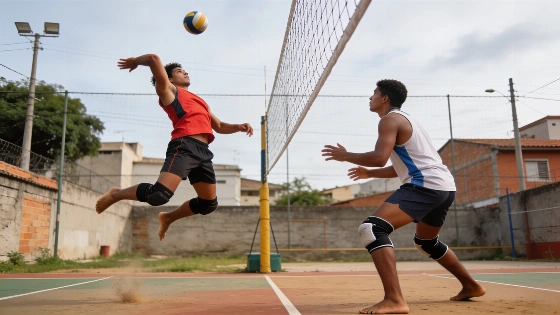
Baldezinho stands out as a sport that lets students and independent learners build coordination and teamwork through active play. The game mixes soccer and volleyball elements, making it easy to pick up for different skill levels and suitable for many educational settings. The Brazilian Ministry of Sport keeps a collection of sports materials and publications, but Baldezinho does not appear as a formally recognized discipline in the ministry's official resources (Ministério do Esporte, Governo Federal do Brasil).
How Baldezinho Works
Players compete on a court smaller than a standard volleyball court, with a net height close to beach volleyball. Each team has two players. The goal is to send the ball over the net and land it in the other team's court, while blocking the same attempt from opponents. Players can use any part of their body to hit the ball, and each may touch the ball up to three times before sending it back. This setup encourages creative moves and quick thinking, keeping both players and spectators engaged. These details come from practice guidance and instructional recommendations.
Developing Core Skills
Winning in Baldezinho relies on teammates communicating well and moving in sync. Practicing ball control and agility helps with accurate shots and solid defense. Educators can use the game to teach teamwork, spatial awareness, and the value of clear communication in fast-paced play. The Brazilian Ministry of Sport offers general materials for sports education, but there is no Baldezinho-specific curriculum or technical manual in its official collection.
Advanced Techniques and Strategies
As players improve, they can sharpen their serving and spiking. A well-placed serve can put the other team on the defensive right away, while spiking takes careful timing and positioning. Defense matters just as much; quick reflexes and agile footwork let players react to incoming shots. Consistent practice and focused drills help learners build these advanced skills over time.
Common Mistakes and How to Avoid Them
One common issue is poor communication, which can cause missed plays and defensive lapses. Another is putting all the focus on power shots instead of balancing power with accuracy and unpredictability. Learners should also pay attention to defense, since a strong back line can change the flow of a match.
Equipment and Safety Considerations
Baldezinho uses a smaller, lighter ball than regular soccer. Players do best with athletic shoes that grip well, knee pads for protection during dives and slides, and comfortable, breathable clothes. These choices help prevent injuries and support quick movement on the court. No official technical specs or safety standards for Baldezinho have been published by recognized sports authorities.
Training and Community Engagement
Organized training programs help players build technical skills and tactical awareness. Coaches may look at individual strengths and weaknesses to shape practice sessions. Outside formal training, learners can join online forums and social media groups to connect with others, share advice, and keep up with tournaments and events. This kind of engagement helps players keep improving and builds a sense of community around Baldezinho.
Educational Applications
Baldezinho fits into physical education classes or extracurricular programs to boost fitness and teamwork, and it can support digital literacy when paired with online resources. Teachers and coaches can use video analysis, match recordings, and group discussions to help students review their performance and spot areas for growth. These methods match best practices in educational technology by encouraging self-assessment and collaborative learning. The Brazilian Ministry of Sport's publication portal provides a range of general sports education materials for educators and learners (official ministry portal).