People looking for softer, chewable ice—whether for hydration, recovery, or just to enjoy a texture like restaurant nugget ice—can make ice chips at home without buying specialized machines. Basic kitchen tools and a few straightforward techniques get the job done.
Essential Methods for Making Ice Chips
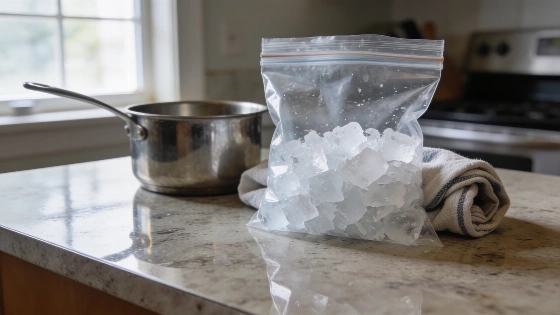
One easy method is to put regular ice cubes in a zip-top bag, leaving some space so the cubes can move. Wrap the bag in a kitchen towel to keep it from tearing and to soak up moisture. Use a saucepan, rolling pin, or meat mallet to break the ice into smaller pieces. Vary the force and how long you crush to control the size and texture, from coarse chips to finer, snow-like bits. These are practical kitchen approaches, and results depend on your tools, freezer temperature, water makeup, and how long you handle the ice.
For more even chips, try a blender or food processor. Add ice cubes and pulse briefly a few times. Short bursts keep the pieces chip-sized, while holding the button down turns the ice to slush. Food processors can handle larger batches, which helps if you need more at once. Tips like using "short bursts" for chips and continuous blending for slush come from hands-on experience, not lab-tested specs.
If you want to skip crushing, use ice cube trays with small compartments or fill standard trays only partway to make thin, flat cubes. Silicone molds for mini cubes or small cylinders also give you pieces close to chip size right from the freezer. The texture from mini molds, thin cubes, and shallow containers changes with freezer temperature and water composition.
Tips for Softer and Chewable Ice
Ice from a home freezer is usually dense and hard. Restaurant nugget ice feels softer because its structure traps water and air. Home methods can't fully copy commercial machines, but a few tricks help. Freezing carbonated or sparkling water adds small bubbles, making the ice more porous and a bit softer. Club soda or plain seltzer work well for neutral-tasting chips. This is a household experiment, not a proven physical effect.
How fast ice freezes also changes its texture. Lower your freezer temperature before making ice, or use smaller molds and shallow containers to speed up freezing and create smaller crystals. This leads to smoother, less jagged chips that are easier to chew. There aren't solid numbers on chip size, freezing rates, or crystal dimensions to measure these effects.
In very cold conditions, water sprayed into frigid air quickly forms tiny ice crystals, a process linked to the Mpemba effect. The University of Wisconsin IceCube Collaboration describes it: “Thrown into an arc overhead, a spray of hot water in very cold air temperatures quickly transforms into a spray of tiny ice crystals, often referenced as the Mpemba effect.” This involves airborne droplets, rapid heat loss, and extremely low temperatures, which is different from what happens in a typical home freezer.
Adding Flavor and Electrolytes
Ice chips can do more than chill drinks. For hydration or recovery, mix water with a splash of juice and a pinch of unrefined salt before freezing. To make a homemade electrolyte ice chip, dissolve half a teaspoon of salt and about two and a half tablespoons of sugar in one liter of water, then freeze within a day. This method comes from oral rehydration guidelines and helps deliver electrolytes slowly as the chips melt.
For a fruitier option, blend coconut water, orange juice, lemon juice, sea salt, and honey to taste, then freeze in small molds. These flavored chips are useful for people with nausea, since small pieces are easier to handle than a full glass of liquid. Herbal tea, diluted sports drinks, or pureed fruit can also be frozen into chip-sized pieces for variety.
Ice Chips for Recovery and Hydration
Medical settings often use ice chips to help people take in fluids after surgery or during illness. They let patients get small, controlled amounts of water that are less likely to cause discomfort or vomiting than drinking. For those with swallowing problems, small and thin ice chips are safer and help practice swallowing without straining the throat.
Protecting Dental Health
Chewing hard ice can harm tooth enamel and fillings. Rich Homer from the University of Utah School of Dentistry points out that repeated force may cause tiny cracks or loosen fillings, raising the risk of cavities. Softer ice, like chips made from carbonated water or ice left at room temperature for a short time, is less likely to damage teeth. Crushing ice into small, thin pieces also puts less stress on enamel than biting whole cubes.
Countertop Nugget Ice Makers
People who use ice chips often may want a countertop nugget ice maker. These machines make soft, chewable pellet ice by freezing water into thin flakes and compressing them with an internal auger. The process traps air, giving the ice a texture like compressed snow. Machines usually cost between $150 and $500 and can run continuously. For occasional use, manual methods with a bag and mallet or a blender work well and don't require extra gear. The University of Wisconsin IceCube Collaboration notes that while you don't need to be at the South Pole to experiment with ice formation, very cold air can create unique ice textures not usually found in home freezers.