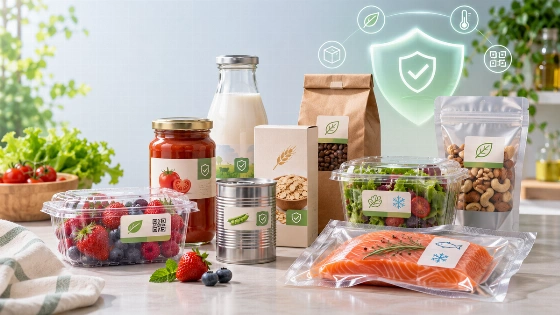
When you shop for groceries, packaging does more than just contain your food. It helps keep food safe, extends how long it lasts, and makes products easier to move and use. Knowing what goes into food packaging and how it works can help shoppers make better choices and see the science behind everyday meals.
How Packaging Protects Food
Food packaging forms a barrier against contamination and spoilage. Airtight containers keep oxygen away from foods that would spoil fast. Packaging also manages moisture—helping foods avoid drying out or picking up unwanted dampness. The U.S. Food and Drug Administration (FDA) reviews packaging materials to confirm they are safe for food contact. The FDA keeps a detailed inventory of food-contact substances, including effective notifications, substances listed in 21 CFR, environmental-impact decisions, and notifications that are no longer effective. This inventory shows that food-packaging oversight is not a single blanket approval but a substance- and use-specific regulatory system, with updates listed through 2026. The system also covers submissions involving post-consumer recycled plastics intended for food-contact articles, which highlights the technical challenge of checking recycled materials for contamination and migration risks. The FDA’s approach identifies which substances and uses have an active regulatory basis, instead of treating all packaging materials as interchangeable (FDA Food Ingredients and Packaging Inventories).
Some migration of substances can happen over time, but the FDA sets limits to keep these levels well below what could cause harm. Packaging also protects fragile foods from being crushed or broken during shipping and handling. The FDA’s food-allergen program shows how packaging and labeling work together to lower consumer risk. The eight major allergens covered when the Food Allergen Labeling and Consumer Protection Act was enacted made up 90% of food allergies and serious allergic reactions in the United States. The law requires packaged foods to list the food source of major allergens, and the FDA inspects and samples products to check labeling and controls against allergen cross-contact during manufacturing and packaging. The FDA has stated, “At this time, the FDA has not established a threshold level for any allergens,” which makes accurate ingredient and allergen declarations especially important (FDA Food Allergies).
On January 6, 2025, the FDA published the fifth edition of its industry guidance on food-allergen labeling requirements. This guidance covers milk, egg, fish, crustacean shellfish, tree nuts, wheat, peanuts, soybeans, and sesame, and is meant to help manufacturers comply with the Federal Food, Drug, and Cosmetic Act. The guidance links the consumer-facing package label with upstream sanitation, process-control, and packing procedures, showing that labeling is part of a broader preventive system, not just a design feature.
Convenience and Information for Shoppers
Modern packaging makes buying, storing, and using food in the right amounts easier. Clear containers let shoppers see what they are getting, and resealable or portioned packages help with storage and cut down on waste. Labels give key details like nutrition facts, ingredients, expiration dates, and sometimes recipes or cooking tips. If a food recall happens, unique barcodes and traceability systems let companies track products through the supply chain, helping them find and remove affected items quickly. IFT’s Global Food Traceability Center reports that this process improves food safety and lowers risks for both shoppers and the food industry.
The FDA Food Code covers food safety at retail and in foodservice, where packaging, containers, holding conditions, and handling practices can affect the risk of foodborne illness. The agency describes the Food Code as practical, science-based guidance for reducing known risk factors that lead to outbreaks. The Food Code is guidance adopted by state and territorial authorities, not a single nationwide retail law, so its adoption status varies by location. This creates a regulatory difference: packaging used by manufacturers may fall under federal food-contact and labeling rules, while packaging and handling at restaurants and retail stores may also be governed by locally adopted Food Code rules.
Main Types of Food Packaging Materials
Food packaging uses several materials, each with its own strengths and limits. Here are the main types:
- Glass: Used for thousands of years, glass is chemically inert and blocks gases and microorganisms. It can be sterilized, reused, and recycled, but it is heavy and breakable. Glass makes up about 10 percent of food packaging.
- Metals: Aluminum, tinplated steel, and tin-free steel are common in cans and containers. Metals provide strong barriers and can be heat-treated for sterility. Aluminum is lightweight and seamless, while tinplate is strong and used for many products. Tin-free steel is the strongest but needs protective coatings to prevent corrosion. Like glass, metals account for about 10 percent of food packaging.
- Paper and Paperboard: Dating back to the 1600s, paper packaging must be treated with wax, lacquer, or resin to hold food safely. Kraft and parchment papers are made more resistant to water and oil through treatment. Paperboard is widely used for boxes and shipping. Together, paper and paperboard make up 35 percent of food packaging.
- Plastic: The most versatile and widely used material, plastic is lightweight, inexpensive, and fits many foods. Plastics are identified by numbers that show their type and recycling category. For example, Plastic #1 is used for water and soda bottles, while Plastic #2 is found in milk jugs and cereal box liners. Other types are used for food wraps, yogurt containers, and Styrofoam trays. Plastic packaging is made for convenience, heat-sealing, and even microwaving. The FDA’s inventory includes submissions involving post-consumer recycled plastics intended for food-contact articles, reflecting ongoing review of recycled materials for contamination and migration risks.
Why Food Packaging Matters for Everyday Life
Packaging is more than a container—it is a system that supports food safety, convenience, and information sharing. Whether shopping for a week’s groceries or grabbing a snack, packaging helps food arrive safely, stay fresh, and gives the details needed for healthy choices. The U.S. Department of Agriculture defines food loss as the edible amount of food available for human consumption after harvest that is not eaten for any reason. Packaging can affect this by protecting food from damage and environmental exposure, but benefits should be weighed against material use, disposal, recycling, and the amount of food saved. Knowing the basics of food packaging materials can help people see the technology and regulation that protect food from production to plate.
FDA import-alert records show that packaging format can create specific food-safety concerns. For example, an FDA import alert for refrigerated raw fish and fishery products in reduced-oxygen packaging warns of the risk of Clostridium botulinum toxin if controls, refrigeration, or labeling are lacking. The alert, Import Alert 16-125, published on October 15, 2026, applies when products are refrigerated, not frozen, and lack proper labeling. This shows why packaging claims about freshness or shelf life must be checked alongside temperature control, product type, and microbial hazards. Documentation and labeling are central to import clearance, and validated controls are needed for safety in reduced-oxygen packaging (FDA Import Alerts for Singapore).