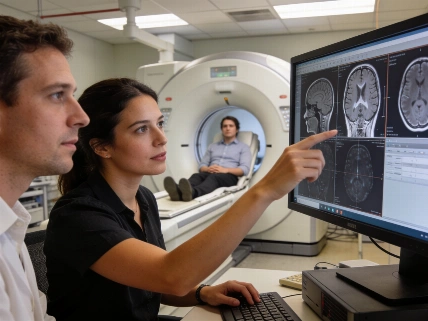
The EPSRC HeartTech Hub has opened at King’s College London, focusing on artificial intelligence, wearable devices, and imaging technologies for cardiovascular health. The project secured £10.8 million from the Engineering and Physical Sciences Research Council (EPSRC), with partner organizations adding £10 million in cash and in-kind support. The total funding includes a £1 million contribution from the UKRI Life Sciences Programme, bringing the award to £10,865,643. HeartTech Hub stands as one of five national health-technology hubs backed by more than £52 million in UK government funding. This aligns with a policy push to move care away from hospitals and toward prevention, home monitoring, and community-based services. The initiative was announced on 9 November 2026, with King’s College London as the lead and Professor Sebastien Ourselin as Hub Director.
AI and Wearables for Early Heart Health Intervention
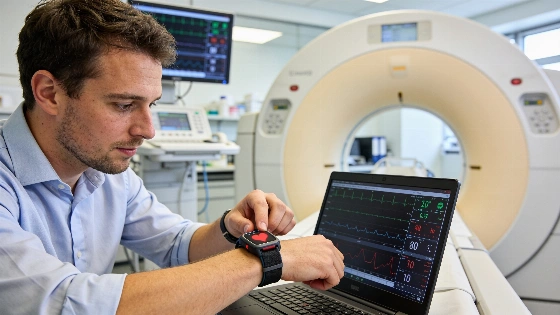
The HeartTech Hub plans to use data from wearable devices, medical imaging, health records, and community-based measurements to spot people at risk of cardiovascular disease. Cardiovascular disease affects over 7 million people in the United Kingdom and causes about one-quarter of all deaths, according to UK Research and Innovation programme materials. By bringing these sources together, the research team aims to enable earlier intervention and easier diagnosis, especially outside specialist hospital settings. Their technical model integrates several forms of health information, rather than relying on a single diagnostic device, and includes personal wearable sensors, advanced imaging, and community-collected health data.
Professor Sebastien Ourselin, Head of the School of Biomedical Engineering & Imaging Sciences and Assistant Principal (Innovation) at King’s College London, leads the hub. He points to the challenge of shifting from hospital-based care to community-focused prevention, saying scalable technologies are needed for this change. Ourselin notes, “As a society, we have talked about shifting towards prevention for many years, but making that change at scale has been challenging because it requires technologies that can be used effectively in community settings, not just hospitals.”
Personalized Tools and AI-Powered Coaching
The research will look at new imaging and computer modeling techniques to assess cardiovascular risk before disease develops or progresses. One planned development is an AI-powered wellbeing coach designed to give personalized lifestyle guidance and prompt users when medical advice or further assessment may be needed. This system is described as combining health data with personalized risk models to support monitoring and management at home or in local communities. Its intended role is to identify thresholds or warning signs that should prompt medical advice, rather than replacing clinicians. The coach is a planned research development and is not yet an approved medical device or NHS service. Health data and risk models will also inform tools to help people monitor and manage their heart health at home and within their communities.
Writing on LinkedIn, Ourselin described the broader vision: “From AI-enabled health and wellbeing support, intelligent imaging systems to emerging advances in robotics and autonomous technologies, we have an opportunity to develop innovations that can reach people in their communities and before hospital intervention is required.”
Collaboration Across Research and Healthcare
The HeartTech Hub brings together six British Heart Foundation Centres of Research Excellence—Edinburgh, Leicester, Manchester, Oxford, UCL, and King’s—alongside three NHS trusts through King’s Health Partners. Other participants include the Oxford Community Diagnostic Centre, Health Data for London, primary care organizations, local authorities, and patient and community partners. The consortium includes more than 35 industry collaborators and connects university research with organizations delivering care, developing technology, and supporting people in their communities. Industrial and clinical partners include Siemens Healthineers, GE Healthcare, Google Health UK, Garmin, Canon, Heartfelt Technologies Ltd, Cardiology Devices Ltd, and Medtronic. These partners contribute cash, equipment, expertise, and data-access capabilities alongside the public grant.
King’s College London points to reliance on hospital-based services, specialist staff, and expensive equipment as barriers to access in some regions. The hub’s research is intended to support the NHS and UK Government’s 10-Year Health Plan by developing technologies that can be used outside specialist centers. The HeartTech Hub’s workstreams include earlier cardiovascular-risk identification, more accessible imaging, home and community monitoring, personalized risk modeling, and development of the AI wellbeing coach. EPSRC, part of UK Research and Innovation (UKRI), awarded the grant to establish the hub. Patients and members of the public will be involved throughout the research process to help ensure the technologies are inclusive and designed around people’s needs. The initiative is currently a funded national research partnership, with impact claims framed as intended research outcomes rather than demonstrated benefits. For further details, see the official King’s College London announcement.
For readers interested in broader questions about AI’s role in research, a recent report explores how AI acceleration is affecting research progress in other fields.