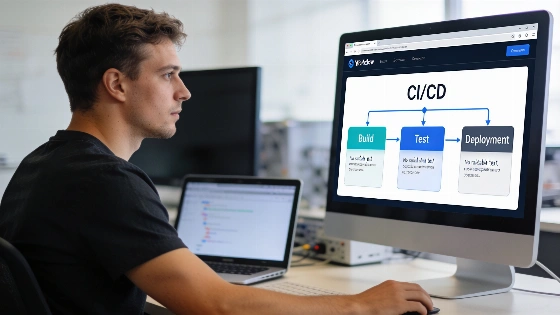
Teams now rely on automated systems to build, test, and deploy code, making these processes central to software development. Continuous integration and continuous delivery (CI/CD) pipelines help deliver updates at speed, cutting down on errors and reducing manual steps. For those learning the ropes or aiming to sharpen their skills, knowing how to set up and run CI/CD workflows pays off in both solo and group projects.
Understanding CI/CD in Practice
Continuous integration means code gets built and tested automatically whenever someone commits changes to version control. This method spots errors early and helps new features or fixes blend into the existing codebase. Continuous delivery takes it further by automating the deployment of tested code to production or staging, so teams can push updates quickly and with consistency.
Managing Software Components
Organized management of software components forms the backbone of strong CI/CD pipelines. Using version control systems like Git or Apache Subversion lets teams track changes, work together efficiently, and keep a clear record of development. Watching repository activity can trigger automated workflows, which streamlines builds, tests, and deployments as the codebase changes.
Designing and Implementing Pipelines
CI/CD pipelines work as automated sequences that react to code changes. Tools such as AWS CodePipeline, Jenkins, GitLab, and CircleCI help developers build these pipelines. The usual steps include building the app, running automated tests, and deploying to the right environment. Teams often start with a basic continuous integration pipeline, then add continuous delivery stages and tailor configurations for different branches or groups as needed.
When mapping out deployments, teams weigh factors like deployment windows, system load, and who is available. Scheduling during low-traffic times can limit the fallout from rollbacks. In-place, rolling, immutable, and blue/green deployments are common strategies. Managed services can take care of availability and security, making pipeline management less of a headache.
Integrating Automated Testing
Current development methods push testing earlier in the workflow, a move often called "shifting left." Running unit, integration, and functional tests before code lands in the main repository gives developers fast feedback and a chance to fix issues before they spread. Automated testing should also cover static code analysis, performance checks, and security reviews to keep code quality and reliability high.
Documenting Pipelines and Infrastructure
Clear documentation keeps CI/CD pipelines maintainable and scalable. It should explain pipeline architecture, tool choices, configuration details, security steps, and troubleshooting. This way, everyone on the team knows how the pipeline works and can help improve it over time.
Infrastructure as Code and Configuration Management
Managing infrastructure through code—using tools like Terraform, Ansible, or AWS CloudFormation—makes environments predictable and repeatable. All changes, including database setup, should be tracked in version control and rolled out through pipelines. Configuration management tools automate setup and upkeep of software and infrastructure, helping teams keep environments in the desired state.
Monitoring, Metrics, and Post-Deployment Practices
Bringing monitoring and logging into CI/CD workflows gives teams real-time data on how applications perform and helps spot problems fast. Metrics like build frequency, deployment frequency, lead time for changes, and build duration show how healthy the pipeline is and what impact it has on the business. After deployments, automated synthetic tests and KPI monitoring catch errors quickly. Industry workshops, such as the NIST Workshop on SI Incident Management in November 2026, have highlighted the need for telemetry, identity governance, and coordinated accountability in advanced systems. However, NIST has not set formal regulatory requirements or standard metrics for CI/CD pipelines (NIST IR 8621).
Advancing CI/CD with Modern Techniques
Organizations looking to improve their CI/CD processes can turn to advanced methods for better performance and reliability. AI and machine learning can automate test creation, prioritize tests, and use predictive analytics to spot issues. Chaos engineering introduces controlled failures to test resilience, while observability tools like Amazon CloudWatch and AWS X-Ray give deeper insight into infrastructure and application behavior. GitOps, which uses Git repositories as the single source of truth for infrastructure and configuration, streamlines change management and boosts traceability.
AWS Prescriptive Guidance notes that moving from traditional development and infrastructure management to automated CI/CD workflows lets teams deliver software faster, cut deployment risks, and keep applications up to date with new features and fixes. The National Institute of Standards and Technology (NIST) continues to develop guidance for incident management in advanced systems, focusing on operational telemetry and shared responsibility across distributed technology value chains (NIST news release).