Artificial intelligence has started to reshape classroom routines, promising to free up educators' time. The bigger question is how to keep automation from eroding the instructional depth and personal connection that make teaching effective. UNESCO's 2023 guidance calls for a "human-centred approach" to generative AI in education, pointing to the need for teacher training and data privacy, as well as age-appropriate use and institutional validation. The guidance makes clear that technology should back up, not override, teachers' professional judgment and pedagogical responsibility. This becomes especially important as education systems shift from pilot projects to formal governance and classroom use.
AI in Practice: Streamlining Without Surrendering Control
Research from a collaboration between Digital Promise and D2L looked at how higher education faculty and instructional leaders use AI features in D2L Brightspace, focusing on the D2L Lumi suite. The study found educators preferred AI tools with clear, practical limits. Lumi Quiz, which generates assessment questions from course content, stood out for its speed and efficiency. Its main benefit, though, was that educators could review, edit, and approve questions before students saw them. This setup cut down on repetitive work but kept educators in charge of instructional choices. UNESCO's 2026 educator guide, AI Answers. You Decide., underscores the need for teachers to critically evaluate AI outputs. It encourages teachers to put machine-produced information in context and challenge it, rather than simply accept it.
Beyond Content Creation: Administrative Support and Human Focus
Faculty and staff in the study saw AI as a way to handle routine administrative work—sending announcements and managing calendar reminders, or reaching out to students who missed assignments. Their aim was to clear away busywork so they could focus on creative and relational parts of teaching, not to hand over instruction to AI. This distinction matches findings from earlier analysis that stressed the need to balance automation with human judgment in education. UNESCO's reporting on AI in low-resource settings, such as the rollout of one shared device per classroom in about 14,000 public schools in Kenya and Nigeria, shows that efficiency gains are strongest when AI handles specific tasks and teachers confirm its output, rather than letting AI set the full instructional path (UNESCO article).
Feedback and the Limits of Automation
The study also looked at AI-supported feedback through Lumi Feedback at one participating institution. These findings are early and shouldn't be generalized, but they point to the challenges of automating feedback. Reading student work does more than assign grades or comments. It helps educators spot misconceptions and understand student experiences, which lets them adjust their teaching. Automating this process without recognizing its different purposes risks losing key instructional insight. UNESCO's 2026 account draws a line between narrow educational uses, like arithmetic practice and step-by-step hints, and open-ended systems that need broad knowledge and complex reasoning. Limiting a model's scope can boost reliability and make errors easier for teachers to catch, supporting a setup where automation handles repeatable tasks and teachers keep responsibility for interpretation and final judgment.
Preserving What Matters in AI-Enhanced Education
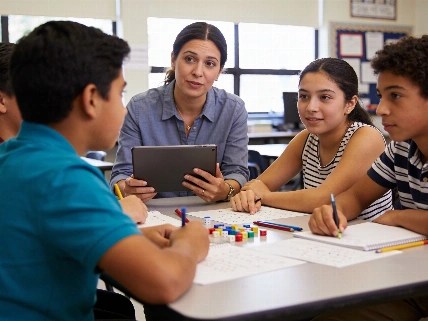
As AI tools become more common in educational platforms, the main question is what parts of teaching they protect or change, not just how much time they save. The research points to AI applications that back up educators' expertise, making sure efficiency doesn't come at the cost of meaningful learning or human connection. UNESCO's stance is that teachers must stay "in the loop" to check, interpret, and put AI-generated support in context. Responsible use of AI in education calls for community participation, transparency, and clear human verification before content reaches students. This approach fits with the wider move toward a human-centred, accountable, and pedagogically sound use of AI in education. For more on balancing automation and educator oversight, see this related coverage.