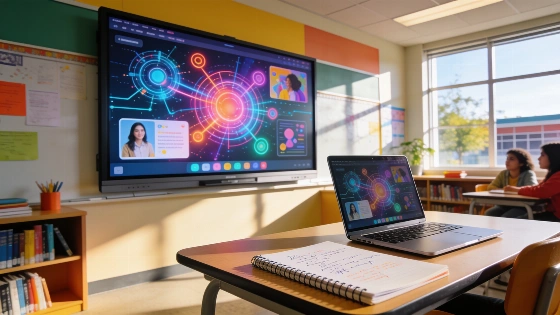
With artificial intelligence now able to imitate human expression, teachers face a new task: helping students spot and protect their own voices in a digital landscape. KQED, the public media station for Northern California, has launched Finding First Person: Telling My Story in the Age of AI, a free curriculum aimed at giving high school students narrative agency and the tools to make informed decisions about using AI in creative projects.
What Is Narrative Agency and Why Does It Matter?
Narrative agency means understanding, valuing, and keeping control of one’s own voice and perspective. In the AI era, this involves guiding students to tell the difference between their real ideas and what chatbots or other generative tools produce. Rachel Roberson, Senior Program Manager at KQED and co-developer of the program, says, “Narrative agency puts the student first and the AI tool later.” She stresses that students should make choices based on their own experiences and values, especially as AI systems get better at mimicking human viewpoints.
Worries about AI-driven cheating or students leaning too much on automated writing have led some teachers to consider outright bans. Roberson counters that such bans may simply hide the problem instead of solving it. The Finding First Person unit instead asks students to think about how, when, and why they might use AI, building responsibility and self-awareness into their creative process.
Recent studies show why this work matters. A Pew Research Center survey found that 26% of U.S. teenagers used ChatGPT for schoolwork in fall 2024, up from 13% in fall 2023. By fall 2025, 54% of U.S. teens ages 13 to 17 said they used any AI chatbot for schoolwork, and about 10% reported using chatbots for all or most assignments. The same survey found that 59% of teens believed students at their school use AI chatbots to cheat at least somewhat often, with 34% describing such use as very or extremely frequent. RAND Corporation research from December 2025 reported that 62% of U.S. middle-school, high-school, and college students used AI for homework, but over 80% said teachers had not directly taught them how to use AI for schoolwork. College Board data from May 2025 showed that 84% of U.S. high-school students used generative AI tools for schoolwork, and 69% had used ChatGPT for assignments or homework. These numbers point to the need for lessons that help students judge, credit, and use AI-generated content responsibly while keeping their own narrative voice intact.
Inside the Finding First Person Curriculum
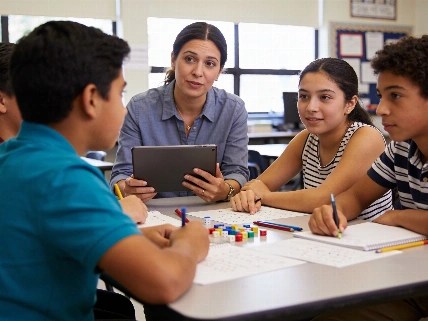
Created with feedback from high school students, the 15-lesson unit is meant for English, ethnic studies, and media arts classes, but can be tailored for any setting focused on personal narrative. Students take part in activities that help them clarify their values, look at AI’s changing role in society, and critically review AI-generated work. The curriculum does not push for or against AI use; it gives space for analysis and discussion.
During the unit, students are guided to produce either an audio essay or a short video reflecting on their experiences with AI and personal agency. These projects can be shared outside the classroom through the Youth Media Challenge Showcase, letting students add their voices to the national conversation about AI and identity.
Tools and Support for Teachers
The curriculum package offers customizable slides for students, daily reflection prompts, graphic organizers, assignment sheets, detailed lesson plans with objectives and standards alignments, and rubrics and checklists for assessment. Teachers also get instructions for submitting student work to the KQED Youth Media Showcase.
KQED is now looking for twelve teachers across the United States to field test the unit. Professional learning opportunities are planned for educators, including conference presentations and online events. For those seeking broader approaches to AI literacy in the classroom, resources like the UNESCO teaching guide provide more strategies for building critical thinking about AI-generated information.
Student Perspectives on AI and Voice
One student contributor, Shilynn BaFarlough, said that exploring narrative agency led to the realization that “AI should not replace my own voice. I should be the person deciding what I want to say, what experiences I want to share, and what my perspective is.” This insight matches the main goal of the curriculum: helping students keep control over their stories, even as AI becomes a bigger part of creative and academic work.
As schools adjust to the fast growth of AI use, there is more focus on teaching students how to use these tools and how to judge their outputs, spot issues like bias and privacy, and tell the difference between editing and creating original work. This change shows up in policy debates internationally, such as the United Kingdom Department for Education's August 2025 update to its generative-AI-in-education policy paper, which points to a shift from restriction toward guided use and direct instruction.
Access and Additional Information
Finding First Person and its teacher toolkit are free from KQED. Support for the project comes from several foundations and donors, including the Jim Boyce Charitable Trust, Charlotte Cheng and Brian Cervenka, Susan and Thomas Harrington, the Robert and Shirley Harris Family Foundation, Gayle McKinney Peterson, the Stuart Foundation, Young Futures, an anonymous donor, and KQED members. For more details, visit the official KQED website or contact Janelle Kim, Senior Marketing and Communications Manager for Education at KQED.