Navigating museums without sighted assistance remains a challenge for many blind and low-vision visitors. Audio tours often fall short on clear directions, and most exhibits cater to those who can see. In a recent research project at the Computer History Museum in Mountain View, Thomas Panek, president and CEO of Lighthouse Guild, tried out experimental AI-powered glasses. The museum and Meta teamed up for this pilot, with the Lighthouse Guild offering feedback from the blind community. This early-stage research relies on routes and answers prepared by museum curators and Meta researchers, using only information supplied by the museum.
How AI Glasses Work in the Museum Setting
Developed under Project Aria with Meta, the glasses use spatial audio to guide users through galleries and provide exhibit details. An AI assistant answers follow-up questions. Unlike typical audio tours, this system lets users interact with the guide and get directions based on their real-time location. Spatial audio cues help users orient themselves, similar to hearing someone call from another room. AI responses draw only from museum-provided information, which keeps answers relevant and avoids unsupported claims.
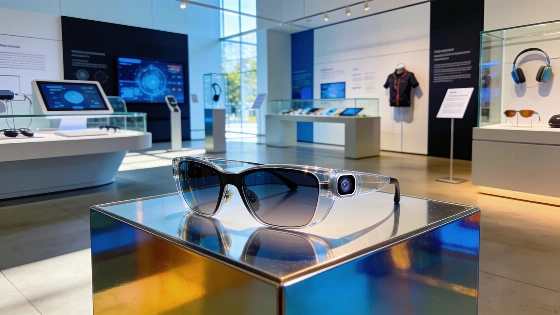
The technology debuted alongside the museum’s “Extended Reality: Visions of the Future” exhibition, which features over 100 devices from six decades of wearable tech. Project Aria research glasses are part of this display, connecting the accessibility trial to the broader history of wearable computing. The exhibition runs through March 28, 2027, but the AI-powered tour is still experimental and not open to all visitors. On certain demonstration days, visitors can borrow Meta glasses in "museum mode," which uses exhibit placards or QR codes to deliver information and answer questions. This mode differs from the experimental navigation system and does not offer the full guidance tested in the research pilot.
Accessibility and User Experience
During select demonstration days, visitors can try "museum mode" by borrowing the glasses. In this setting, users scan placards or QR codes to hear about objects and ask questions. While available to all, the technology holds special value for blind and low-vision communities. Panek described the experience as transformative, saying the glasses let him explore a gallery independently by following spatial audio cues. He noted the system created a conversational experience, helping him move through the space and understand exhibits. The project tackles a common gap in museum accessibility: standard audio tours may describe objects but rarely give reliable instructions for moving between exhibits. Project Aria’s approach aims to combine navigation and interpretation in one interaction, supporting more independent exploration.
Kirsten Tashev, chief curatorial and exhibitions officer at the museum, said wayfinding challenges affect all visitors. The glasses help by letting users follow audio cues, much like locating someone calling from another room. Tashev also observed that sighted visitors could benefit, since many look down at handheld devices instead of engaging with exhibits and companions.
Limitations and Complementary Tools
Despite the promise of AI-powered navigation, Panek pointed out that the glasses do not replace other essential tools. His guide dog, Shadow, still handles obstacle avoidance and safety, while the glasses provide directions and exhibit information. Panek emphasized that both tools serve different purposes and work together, stating that "neither replaces the other." The system did not take over all mobility assistance, as the guide dog continued to monitor the floor, people, and obstacles, while the glasses supplied directional guidance and exhibit details.
Comparing Approaches to Accessibility
While the Computer History Museum tests AI-driven solutions, the Smithsonian Institution uses a different method. Visitors there can connect with trained human interpreters through a visual interpreting service for real-time descriptions and navigation help. The Smithsonian also offers tactile exhibits, audio descriptions, and staff assistance, showing a commitment to multiple accessibility options. Ashley Grady, an accessibility program specialist at the Smithsonian, explained that technology matters but does not cover every need, since visitors have different preferences and requirements.
Privacy and Surveillance Concerns
Smart glasses in public spaces have sparked privacy concerns, especially because of built-in cameras. Reem Suleiman, senior campaign director at Fight for the Future, a digital rights advocacy group, voiced opposition to facial recognition in public and questioned the spread of wearable surveillance technology. Meta says the glasses used in the museum scan placards or QR codes for exhibit recognition only, with camera capture features disabled, no data recorded, and devices reset after each use. The company stated that no data was recorded during the demonstration, but this has not been independently verified by a regulatory authority. Suleiman argued that accessibility tools should be designed specifically for the communities they serve and warned that widespread use of smart glasses could bring significant surveillance risks.
Building Inclusive Policies
Museum staff and advocates agree that clear policies and transparency matter. Panek urged museums to involve blind and low-vision visitors in decision-making and to avoid blanket bans that could limit access. He stressed that accessibility tools should not be treated the same as unauthorized photography devices, and that rules should be developed with input from the affected community.
Readers interested in broader discussions about AI and accessibility in education can find a related reported earlier on how AI systems sometimes fall short in personalizing learning experiences.
The Project Aria tour at the Computer History Museum remains a research initiative, and its potential benefit for independent museum exploration has not yet become a widely available service. Panek hopes that independent, accessible museum visits will become routine for blind visitors in the future. For more information about the exhibition and accessibility initiatives, see the Computer History Museum's official exhibition page.
For additional background on the Project Aria research platform and its development, visit the official Project Aria information page.
For further details on the demonstration and its context, see the original KQED coverage.